Lateral Lunge
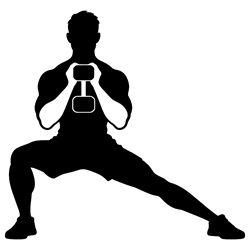
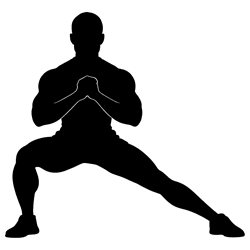
A lunge to the side: you take a big step out, push your hips back and bend that knee while the other leg stays straight, then push back to standing.
Equipment
- Primary muscles
- Quads, Glutes, Adductors
- Secondary
- Hamstrings
- Difficulty
- Beginner
- Logged as
- Weight × reps
- Primary muscles
- Quads, Glutes, Adductors
- Secondary
- Hamstrings
- Difficulty
- Beginner
- Logged as
- Reps
Why do it
The lateral lunge trains your quads, glutes and adductors in the side-to-side direction, which is useful for field and court sports and for anyone whose leg training is all front to back. It's easier than the Cossack squat because you only go to about parallel and keep both feet flat. Start with bodyweight, then hold a dumbbell at your chest; the weight in front also helps you sit back.
How to do it (Dumbbell)
Stand tall holding a dumbbell with both hands in front of your chest.
Take a big step to one side and push your hips back, bending that knee while the other leg stays straight.
Lower until the thigh of the bent leg is about parallel to the floor, both feet pointing forward and flat.
Push off the bent leg to return to standing, then repeat on the other side. Keep your chest up and the knee tracking over the toes.
Stand tall with your feet together and your hands clasped in front of your chest.
Take a big step to one side and push your hips back, bending that knee while the other leg stays straight.
Lower until the thigh of the bent leg is about parallel to the floor, both feet pointing forward and flat.
Push off the bent leg to return to standing, then repeat on the other side. Go only as deep as you can keep both heels down.
Common mistakes
Turning the stepping foot out
Pointing the bent leg's toes outward turns it into a twisted lunge. Keep both feet pointing forward and the knee tracking over the toes.
Pushing the knee forward instead of sitting back
Driving the knee forward loads the front of your knee and leaves your glutes out. Push your hips back, as if sitting into a chair off to the side.
Heels lifting
Lifting the heel of either foot means you've gone deeper than you can control. Go only as deep as both heels stay down.
Step too short
A small step leaves no room to bend one leg while the other stays straight. Take a big step so the trailing leg can stay fully extended.
Sets, reps and progression
How many sets you do and how close to failure you take them depend on your goal and your week, not on the exercise. These guides cover it:
Alternatives that train the same thing
Same movement, a different angle or piece of equipment.