Lying Biceps Curl
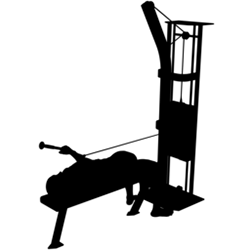
A cable curl done lying on your back: with your feet toward the low pulley and your elbows at your sides, you curl a straight bar toward your shoulders, isolating your biceps.
- Primary muscles
- Biceps
- Secondary
- Forearm flexors
- Difficulty
- Beginner
- Logged as
- Weight × reps
Loads from YouTube only when you press play. The video is by an independent creator.
Why do it
Lying down takes your back and hips out of the curl entirely, which makes it a good choice when you want very strict biceps work or your lower back is tired from other training. The cable keeps a steady pull through the whole rep, and because you're on a bench there's no balance to manage. It takes a little more setup than a standing cable curl and you'll use less weight, but every rep is clean.
How to do it
Attach a straight bar to the low pulley and set a flat bench in front of it, feet toward the machine.
Lie on your back and hold the bar underhand with your arms extended toward the pulley and your elbows at your sides.
Curl the bar toward your shoulders, keeping your upper arms still.
Extend your arms slowly against the pull. Lying down takes your back and hips out of it, so there's nothing left to swing with.
Common mistakes
Elbows lifting off your sides
If your upper arms rise toward the ceiling as you curl, your shoulders take part of the load. Keep your elbows down by your sides.
Curling your head and shoulders up
Crunching up to meet the bar shortens the curl and pulls your abs in. Keep your head and shoulders on the bench.
Letting the cable pull you straight
The stack wants to snap your arms back toward the pulley. Extend them slowly against the pull until they're straight.
Stopping with bent elbows
Turning around before your arms straighten skips the stretch. Let the cable lengthen your arms fully before each rep.
Sets, reps and progression
How many sets you do and how close to failure you take them depend on your goal and your week, not on the exercise. These guides cover it:
Alternatives that train the same thing
Same movement, a different angle or piece of equipment.