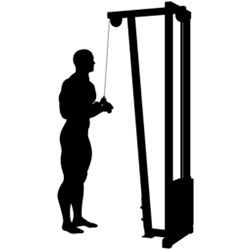
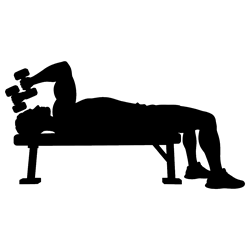
Lying Triceps Extension
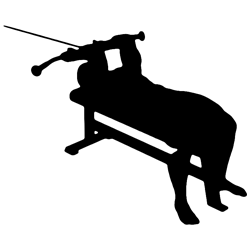
Lying on a bench with your head toward a low pulley, you lower a bar or rope toward your forehead by bending your elbows, then extend your arms, keeping the triceps under cable tension.
- Primary muscles
- Triceps
- Difficulty
- Beginner
- Logged as
- Weight × reps
Loads from YouTube only when you press play. The video is by an independent creator.
Why do it
It's the cable take on the skull crusher. Because the cable pulls from behind your head instead of straight down, the triceps still have to work at the top, where a barbell sits over your joints and the load nearly disappears. You also don't have to get a heavy bar over your face, and the rope lets your hands spread apart. Choose it if free-weight skull crushers bother your elbows or you want constant tension for higher reps.
How to do it
Attach a straight bar or rope to the low pulley and set a flat bench in front of it.
Lie down with your head at the machine end and hold the attachment with straight arms over your chest.
Bend your elbows to lower it toward your forehead, keeping your upper arms pointing up and still.
Extend your arms back to the start. The cable pulls from behind, so tension stays on the triceps at the top where a barbell version loses it.
Common mistakes
Letting your upper arms swing back
If your upper arms drift toward your head each rep, it turns into a pullover and the lats join in. Keep them pointing up and still.
Flaring your elbows
Elbows drifting out to the sides take load off the triceps. Keep them about shoulder-width apart and pointing at the ceiling.
Parking at the top to rest
The cable keeps tension at lockout, which is the point of this version. Squeeze briefly and start the next rep rather than resting there.
Letting the cable pull your hands back
If the stack yanks your hands toward your forehead, you lose control of the stretch. Lower slowly, matching the speed of the press.
Sets, reps and progression
How many sets you do and how close to failure you take them depend on your goal and your week, not on the exercise. These guides cover it:
Alternatives that train the same thing
Same movement, a different angle or piece of equipment.