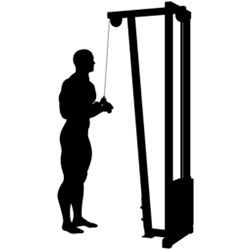
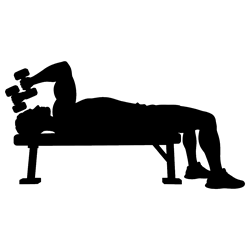
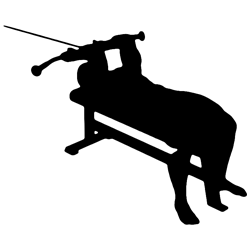
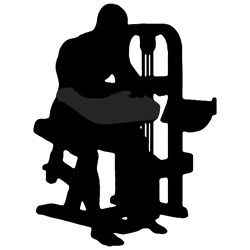
Overhead Triceps Extension
With your arms raised and elbows pointing up beside your head, you lower a weight behind your head and straighten your arms again, working the triceps from a long stretch.
Equipment
- Primary muscles
- Triceps
- Difficulty
- Beginner
- Logged as
- Weight × reps
- Primary muscles
- Triceps
- Difficulty
- Beginner
- Logged as
- Weight × reps
- Primary muscles
- Triceps
- Difficulty
- Intermediate
- Logged as
- Weight × reps
- Primary muscles
- Triceps
- Difficulty
- Beginner
- Logged as
- Weight × reps
Loads from YouTube only when you press play. The video is by an independent creator.
Why do it
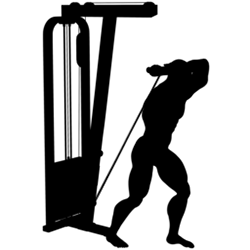
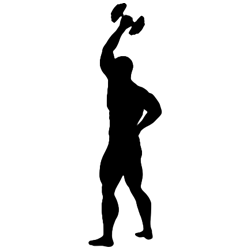
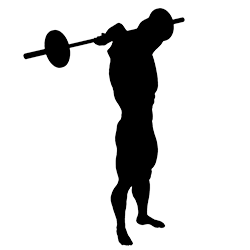
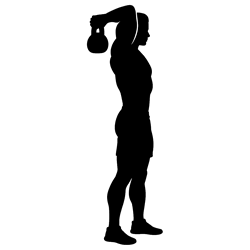
Raising your arms overhead stretches the long head of the triceps, so this trains it in a position pushdowns don't reach. The cable rope is the most common version: steady tension, easy to adjust, and you can spread the rope at the top. The kettlebell held by the horns and the barbell are two-handed free-weight options, though some people find the barbell less comfortable on the shoulders and elbows. The dumbbell version works one arm at a time, which helps you spot a weaker side.
How to do it (Cable)
Attach a rope to the low pulley and stand facing away from the machine, feet staggered.
Raise your arms overhead with your elbows pointing up and close to your ears, holding the rope ends behind your head.
Extend your elbows to press the rope up until your arms are straight, spreading the rope ends apart at the top.
Lower slowly behind your head until you feel a stretch. Only your forearms move.
Hold a dumbbell in one hand and press it overhead until your arm is straight, elbow close to your ear.
Bend your elbow to lower the dumbbell behind your head, keeping your upper arm still.
Go until you feel a stretch in the triceps, roughly when your forearm is level with the floor.
Press back up to straight. Finish all reps on one arm before switching, and use your free hand to steady your working elbow if it drifts.
Stand with your feet shoulder-width apart and hold the barbell overhand at about shoulder width.
Press it overhead until your arms are straight, elbows close to your ears.
Bend your elbows to lower the bar behind your head until you feel a stretch in your triceps.
Press it back up, keeping your upper arms still and your elbows from flaring out. Brace your core so you don't lean back as the bar goes behind you.
Stand or sit tall and hold a kettlebell overhead by the horns with both hands, the bell hanging behind your hands.
Keep your upper arms next to your ears and bend your elbows to lower the kettlebell behind your head.
Stop when you feel a stretch in the triceps.
Press back up until your arms are straight. Only the forearms move; keep your ribs down so your lower back does not arch.
Common mistakes
Flaring the elbows wide
Elbows that drift apart shift load to the shoulders and shorten the stretch. Keep them close to your ears, pointing up.
Arching your lower back
As the weight goes behind your head, it's easy to lean back. Brace your core and keep your ribs down; a staggered stance helps with the cable.
Cutting the stretch short
Stopping with the weight above your head skips the part that sets this exercise apart. Lower until you feel a clear stretch, roughly when your forearms are level with the floor.
Tipping your upper arms forward
If your upper arms move forward as you extend, the shoulders help press. Keep them still beside your head so only your forearms move.
Sets, reps and progression
How many sets you do and how close to failure you take them depend on your goal and your week, not on the exercise. These guides cover it:
Alternatives that train the same thing
Same movement, a different angle or piece of equipment.