Triceps Pushdown
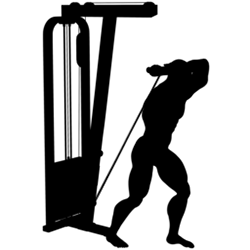
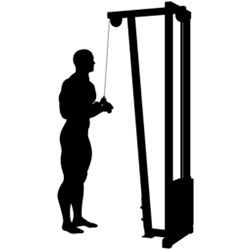
Standing at a high pulley with your elbows at your sides, you push a rope or bar down until your arms are straight, then let it rise slowly, isolating the triceps.
- Primary muscles
- Triceps
- Difficulty
- Beginner
- Logged as
- Weight × reps
Loads from YouTube only when you press play. The video is by an independent creator.
Why do it
It's the triceps exercise most people learn first: simple, easy to adjust and comfortable on the elbows for most. A rope lets your hands split apart at the bottom for a fuller lockout, while a straight bar usually lets you move more weight. Because your arms work by your sides, it trains the triceps in a shortened position, so it pairs well with an overhead extension that covers the stretch. Use it for moderate to high reps, as a main triceps movement or a finisher after pressing.
How to do it
Attach a rope or straight bar to the high pulley and grip it with your elbows bent at your sides.
Stand close to the machine, feet about shoulder-width apart, with a slight forward lean.
Push down until your arms are fully extended, keeping your upper arms pinned to your sides.
Let your forearms come back up slowly. Only your elbows should move.
Common mistakes
Leaning over the bar to move more
A big forward lean lets your bodyweight and shoulders press the stack down. Keep only a slight lean and use a weight your triceps can move alone.
Elbows spreading as you push
With a heavy stack, the elbows tend to flare out to the sides. Keep them tucked against your ribs so the triceps stay on the load.
Letting the stack yank your hands up
If the attachment flies back up past chest height, your elbows lift and the lowering is lost. Control it up until your forearms are about parallel to the floor.
Keeping the rope ends together
With a rope, pulling the ends apart at the bottom gives you a fuller lockout. Pushing straight down with your hands together cuts the rep short.
Sets, reps and progression
How many sets you do and how close to failure you take them depend on your goal and your week, not on the exercise. These guides cover it:
Alternatives that train the same thing
Same movement, a different angle or piece of equipment.