Pistol Squat
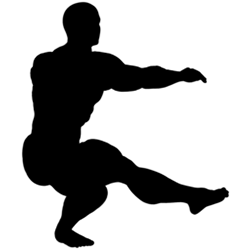
A bodyweight squat on one leg: with the other leg held straight out in front, you sit down as low as you can control and stand back up on the working leg.
- Primary muscles
- Quads, Glutes
- Secondary
- Adductors
- Difficulty
- Advanced
- Logged as
- Reps
Loads from YouTube only when you press play. The video is by an independent creator.
Why do it
The pistol squat demands strength, balance and mobility at once, so it's a skill goal in calisthenics and a hard leg exercise you can do anywhere. Most people need to build up to it: squat down to a box or bench, or hold a rack or doorframe for balance, then reduce the support as you improve. Compared with a Bulgarian split squat, there's no back foot to help you balance, and you go much deeper on the working leg.
How to do it
Stand on one leg with the other extended straight out in front of you, arms forward for balance.
Push your hips back and bend your standing knee, keeping your chest up and the free leg off the floor.
Lower as far as you can control, ideally past parallel.
Drive back up through your whole foot. If you can't get down cleanly, hold a rack or squat to a box until you can.
Common mistakes
Heel lifting off the floor
Rising onto your toes at the bottom usually means your ankle has run out of range. Squat to a box height where your heel stays down, or hold a light weight in front as a counterbalance.
Collapsing into the bottom
Dropping through the last part and bouncing out means you've lost control. Lower slowly all the way, then drive up.
Standing knee caving in
The working knee tends to collapse inward when you strain. Keep it tracking over your toes, and use more support if it won't stay there.
Free leg dropping
Letting the free heel touch the floor turns it into a split squat. Keep the leg up and reach your arms forward for balance.
Sets, reps and progression
How many sets you do and how close to failure you take them depend on your goal and your week, not on the exercise. These guides cover it:
Alternatives that train the same thing
Same movement, a different angle or piece of equipment.