Push Press
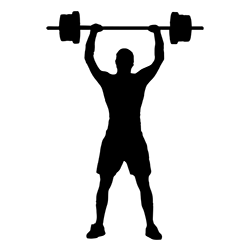
With a barbell on the front of your shoulders, you dip your knees slightly and drive up hard, using that leg drive to press the bar overhead to lockout.
- Primary muscles
- Front delts
- Secondary
- Triceps, Side delts, Quads, Glutes
- Difficulty
- Intermediate
- Logged as
- Weight × reps
Loads from YouTube only when you press play. The video is by an independent creator.
Why do it
It sits between a strict overhead press and the jerk: your legs start the bar moving and your shoulders and triceps finish it. That lets you handle heavier loads overhead than you can press strictly, and it teaches you to pass force from the floor through a braced trunk, which is why athletes and weightlifters use it. The timing between dip and press takes practice, so learn it with light weight before loading up.
How to do it
Hold a barbell at the front of your shoulders with your elbows slightly in front of the bar and your feet hip-width apart.
Dip by bending your knees a few inches, keeping your torso upright.
Drive hard through your legs and use that momentum to press the bar overhead to lockout.
Lower the bar back to your shoulders, bending your knees to absorb it. The dip is short and fast; a slow, deep dip turns it into a bad front squat.
Common mistakes
Dipping too deep or too slowly
A slow, deep dip turns into a front squat and bleeds off the drive. Keep it short and quick, then reverse straight into the drive.
Letting your chest tip forward
If your torso pitches forward in the dip, the bar drives out in front of you instead of straight up. Keep your torso upright and bend only at the knees.
Pressing before the legs finish
Starting the press while your knees are still bent wastes the leg drive. Extend your legs fully and fast, then punch the bar up as it leaves your shoulders.
Catching the bar on stiff legs
Lowering a heavy bar onto locked knees jars your whole body. Bend your knees slightly as it lands on your shoulders to absorb it.
Sets, reps and progression
How many sets you do and how close to failure you take them depend on your goal and your week, not on the exercise. These guides cover it:
Alternatives that train the same thing
Same movement, a different angle or piece of equipment.