Reverse Lunge
A lunge where you step one foot back into a split stance, lower until your back knee hovers above the floor, then push through your front heel to stand.
Equipment
- Primary muscles
- Quads, Glutes
- Secondary
- Hamstrings, Lower back, Adductors
- Difficulty
- Intermediate
- Logged as
- Weight × reps
- Primary muscles
- Quads, Glutes
- Secondary
- Hamstrings, Adductors
- Difficulty
- Beginner
- Logged as
- Weight × reps
- Primary muscles
- Quads, Glutes
- Secondary
- Hamstrings, Adductors
- Difficulty
- Beginner
- Logged as
- Weight × reps
- Primary muscles
- Quads, Glutes
- Secondary
- Hamstrings, Adductors
- Difficulty
- Beginner
- Logged as
- Reps
Loads from YouTube only when you press play. The video is by an independent creator.
Why do it
Stepping back keeps your weight over your front foot, so the reverse lunge is easier to balance than the forward version and tends to feel easier on the front knee. That makes it a good first lunge for beginners and a solid loaded leg exercise for anyone. Bodyweight and dumbbells are the simplest ways in, a barbell loads it most but needs a tight brace, and the Smith machine handles the balance so you can focus on your legs.
How to do it (Barbell)
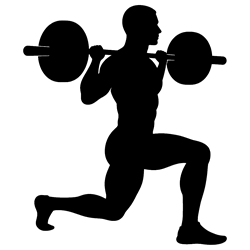
Set a barbell across your upper back as for a squat and stand tall with your feet hip-width apart.
Step one foot back and lower until your front thigh is about parallel to the floor and your back knee hovers just above it.
Keep your torso upright and the bar steady over your midfoot.
Push through the front heel to return to standing, then switch legs. Brace your core before each step; the bar punishes any wobble.
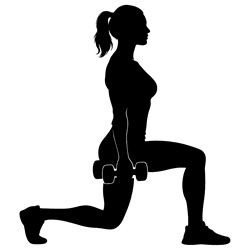
Stand tall with a dumbbell in each hand at your sides.
Step one foot back and lower until your front thigh is about parallel to the floor and your back knee hovers just above it.
Keep your front knee over your midfoot and your torso upright.
Push through the front heel to return to standing, then switch legs. Stepping back instead of forward is easier on the front knee.
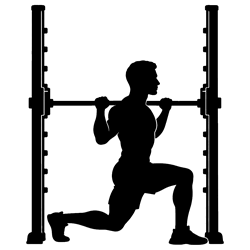
Stand under the Smith machine bar with it resting across your upper back, one foot under the bar and the other ready to step back.
Unhook the bar, step one foot back and lower until your front thigh is about parallel to the floor.
Keep your torso upright; the fixed bar path takes care of the balance.
Push through the front heel to return to standing and repeat, switching legs after the set or every rep.
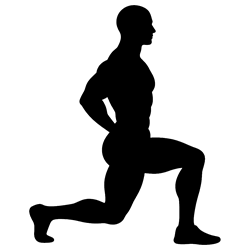
Stand tall with your hands on your hips or clasped in front of your chest.
Step one foot back and lower until your front thigh is about parallel to the floor and your back knee hovers just above it.
Keep your front knee over your midfoot and your torso upright.
Push through the front heel to return to standing, then switch legs. Take a long step so your front shin stays close to vertical.
Common mistakes
Stepping back too short
A short step leaves your front knee far forward and your back knee nowhere to go. Step back far enough that your front shin stays close to vertical.
Pushing off the back foot
Driving up with the rear leg takes work away from the front one. Use your back foot only for balance and push through your front heel.
Stepping straight behind yourself
Placing your back foot directly behind the front one narrows your base and makes you wobble. Step back into a hip-width stance, as if onto two rails.
Leaning forward under the bar
With a barbell on your back, tipping forward loads your lower back and throws you off balance. Brace before each step and keep your chest up.
Sets, reps and progression
How many sets you do and how close to failure you take them depend on your goal and your week, not on the exercise. These guides cover it:
Alternatives that train the same thing
Same movement, a different angle or piece of equipment.