Scapular Pull Up
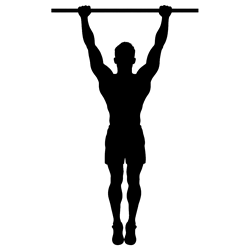
Hanging from a pull-up bar with straight arms, you pull your shoulder blades down and together to lift your body slightly, then lower back to a relaxed hang.
- Primary muscles
- Traps, Lats
- Secondary
- Upper back, Forearm flexors
- Difficulty
- Beginner
- Logged as
- Reps
Loads from YouTube only when you press play. The video is by an independent creator.
Why do it
It isolates the start of a pull-up: the shoulder blade movement that should happen before your elbows bend. That makes it useful for beginners working toward their first pull-up, as a warm-up before pull-ups and rows, and for anyone whose pull-ups start with bent arms and shrugged shoulders. It also builds grip and time on the bar. The range is small, so the value is in control and a clear hold at the top, not in piling up reps.
How to do it
Hang from a pull up bar with an overhand grip and your arms completely straight.
Without bending your elbows, pull your shoulder blades down and together so your body rises a few inches.
Hold the top for a second, feeling the muscles between and below your shoulder blades.
Lower slowly back to a relaxed hang. This is the first inch of a pull up, isolated; keep the arms out of it.
Common mistakes
Bending your elbows
If your arms bend, it becomes a partial pull-up and the shoulder blades do less. Keep your elbows straight and let the rise come only from your shoulders.
Shrugging up instead of pulling down
Lifting your shoulders toward your ears is the opposite of the movement. Pull your shoulder blades down and back, as if tucking them into your back pockets.
Swinging into each rep
Kicking with your legs makes your body rise without the shoulder blades working. Start from a still hang with your legs together and your core lightly tight.
Dropping out of the top
Falling straight back into the hang skips the controlled half of the rep. Hold the top for a second, then lower slowly to a relaxed hang.
Sets, reps and progression
How many sets you do and how close to failure you take them depend on your goal and your week, not on the exercise. These guides cover it:
Alternatives that train the same thing
Same movement, a different angle or piece of equipment.