Upright Row
Standing tall, you pull a bar, cable or dumbbells up along the front of your body with your elbows leading out to the sides, stopping at shoulder height, for the traps and side delts.
Equipment
- Primary muscles
- Traps, Side delts
- Secondary
- Upper back, Biceps
- Difficulty
- Intermediate
- Logged as
- Weight × reps
- Primary muscles
- Traps, Side delts
- Secondary
- Upper back, Biceps
- Difficulty
- Intermediate
- Logged as
- Weight × reps
- Primary muscles
- Traps, Side delts
- Secondary
- Upper back, Biceps
- Difficulty
- Intermediate
- Logged as
- Weight × reps
- Primary muscles
- Traps, Side delts
- Secondary
- Upper back, Biceps
- Difficulty
- Intermediate
- Logged as
- Weight × reps
- Primary muscles
- Traps, Side delts
- Secondary
- Upper back, Biceps
- Difficulty
- Intermediate
- Logged as
- Weight × reps
Loads from YouTube only when you press play. The video is by an independent creator.
Why do it
It hits the traps and side delts together, so it's an efficient pick when you want both in one movement. Some people find it pinches at the top, which is why every version here stops when your elbows reach shoulder height. Dumbbells and cables let your hands drift apart and find their own path, usually the most comfortable option; the EZ bar is easier on the wrists than a straight bar; the barbell and Smith machine load heaviest. If it still doesn't feel right, lateral raises and shrugs cover the same muscles.
How to do it (Cable)
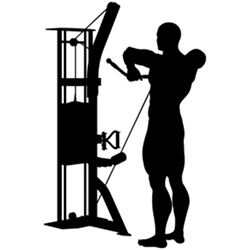
Attach a straight bar or rope to the low pulley and stand facing the machine, feet shoulder-width apart.
Hold the attachment overhand at about shoulder width with your arms straight, hanging at thigh level.
Pull it up along your body, leading with your elbows out to the sides.
Stop when your elbows reach shoulder height, then lower slowly. Pulling higher crowds the shoulder joint without adding much for the traps or side delts.
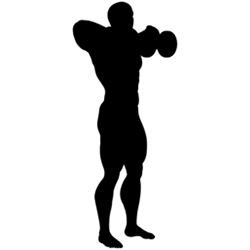
Stand with your feet shoulder-width apart, a dumbbell in each hand in front of your thighs, palms facing your body.
Pull the dumbbells up along your body by leading with your elbows out to the sides.
Stop when your elbows reach shoulder height, dumbbells around chest level.
Lower them slowly. Dumbbells let your hands drift apart on the way up, which is usually easier on the shoulders than a fixed bar.
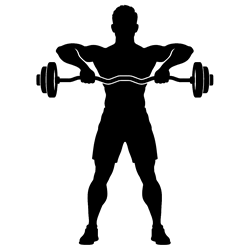
Stand tall holding an EZ bar in front of your thighs with an overhand grip about shoulder-width apart.
Pull the bar straight up along your body, leading with your elbows, until it reaches your lower chest.
Keep your elbows above your wrists at the top.
Lower slowly back to your thighs. The angled grip of the EZ bar is easier on the wrists than a straight bar; stop at chest height to protect the shoulders.
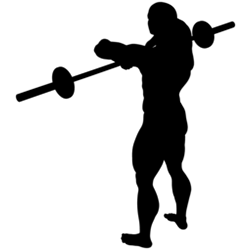
Stand with your feet shoulder-width apart and hold the bar overhand at about shoulder width, arms straight.
Pull the bar up along your body by leading with your elbows out to the sides.
Stop when your elbows reach shoulder height, with the bar around chest level.
Lower it slowly. Pulling higher or gripping much narrower crowds the shoulder joint, so if this pinches, switch to lateral raises.
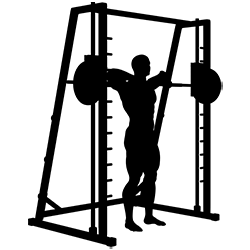
Set the bar so you can reach it standing, grip it overhand at about shoulder width and unlock it.
Stand upright with the bar in front of your thighs, arms straight and knees soft.
Pull the bar up along your body, leading with your elbows out to the sides.
Stop when your elbows reach shoulder height, then lower slowly. Pulling all the way to your chin crowds the shoulder joint without adding much.
Common mistakes
Pulling the bar up to your chin
Pulling above chest height crowds the shoulder without adding much for the traps or delts. Stop when your elbows reach shoulder height.
Gripping too narrow
Hands close together force your elbows into an awkward angle at the top. Hold the bar at about shoulder width, or use dumbbells so your hands can drift apart.
Leading with your hands
If your wrists rise above your elbows, the biceps and forearms take over. Think of lifting your elbows, and keep them above your hands the whole way.
Leaning back and swinging
Rocking your torso back throws the weight up with momentum. Stand tall with soft knees and keep the weight close to your body.
Sets, reps and progression
How many sets you do and how close to failure you take them depend on your goal and your week, not on the exercise. These guides cover it:
Alternatives that train the same thing
Same movement, a different angle or piece of equipment.