Shrug
Holding weight with straight arms, you lift your shoulders straight up toward your ears, pause, and lower them slowly; it's the classic direct work for the upper traps.
Equipment
- Primary muscles
- Traps
- Difficulty
- Beginner
- Logged as
- Weight × reps
- Primary muscles
- Traps
- Difficulty
- Beginner
- Logged as
- Weight × reps
- Primary muscles
- Traps
- Difficulty
- Beginner
- Logged as
- Weight × reps
- Primary muscles
- Traps
- Difficulty
- Beginner
- Logged as
- Weight × reps
- Primary muscles
- Traps
- Difficulty
- Beginner
- Logged as
- Weight × reps
- Primary muscles
- Traps
- Difficulty
- Beginner
- Logged as
- Weight × reps
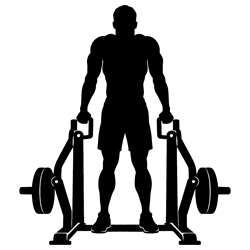
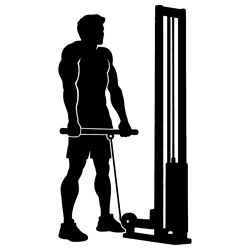
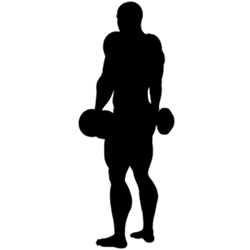
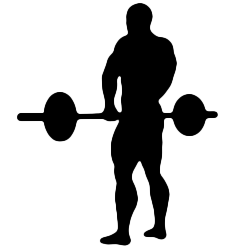
Why do it
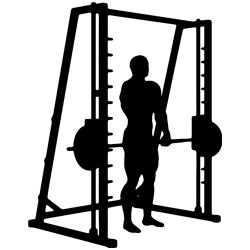
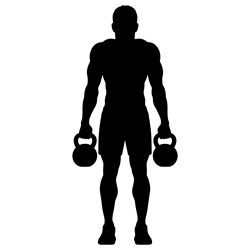
Shrugs are simple and easy to load heavy, which suits the upper traps, and they're the usual pick for a thicker-looking upper back and neck line. Choose by what you have and what feels right: dumbbells and kettlebells hang at your sides and allow a slightly higher shrug; a barbell or Smith bar in front of your thighs loads heaviest; the machine and cable keep it simple and steady. Grip often gives out before your traps on heavy sets, so lifting straps are a reasonable tool here.
How to do it (Machine)
Stand or sit at the shrug machine and grab the handles with straight arms.
Lift your shoulders straight up toward your ears as high as they go.
Hold the top for a second and squeeze your traps.
Lower slowly until your shoulders are fully relaxed. Do not roll your shoulders; straight up and down is all you need.
Stand facing a low pulley holding a straight bar or two handles with straight arms in front of your thighs.
Lift your shoulders straight up toward your ears as high as they go.
Hold the top for a second and squeeze your traps.
Lower slowly until your shoulders are fully relaxed. Stand close to the pulley so the cable pulls almost straight down.
Stand with your feet shoulder-width apart, a dumbbell in each hand at your sides, palms facing your body.
Keep your arms straight throughout.
Shrug your shoulders straight up toward your ears and hold the top for a moment.
Lower them slowly. Dumbbells hang beside your body rather than in front of it, which lets your shoulders travel a little higher than with a barbell.
Stand with your feet shoulder-width apart and hold the bar overhand slightly wider than your shoulders, arms hanging straight in front of your thighs.
Shrug your shoulders straight up toward your ears, keeping the bar close to your body.
Hold the top for a moment.
Lower slowly. Keep your arms straight; bending them turns this into a bad upright row.
Set the bar at mid-thigh height and stand centred in the machine with your feet shoulder-width apart.
Grip the bar overhand, slightly wider than shoulder-width, and keep your arms straight.
Shrug your shoulders straight up toward your ears and hold the top for a moment.
Lower them slowly. The movement goes up and down, so don't roll your shoulders.
Stand tall holding a kettlebell in each hand at your sides, arms straight.
Lift your shoulders straight up toward your ears as high as they go.
Hold the top for a second and squeeze your traps.
Lower slowly until your shoulders are fully relaxed. Keep your arms loose; they only hold the weight.
Common mistakes
Rolling your shoulders
Circling the shoulders forward or back adds nothing for the traps and makes heavy weight harder to control. Lift straight up toward your ears and lower straight down.
Bending your arms
Pulling with bent elbows turns the shrug into a sloppy upright row and brings in the biceps. Keep your arms straight and let them hang.
Moving the weight only an inch
Heavy shrugs often shrink to a twitch. Lower until your shoulders fully relax, then lift as high as they go; if you can't, take some weight off.
Jutting your chin forward
Pushing your head forward as you shrug doesn't help the traps. Keep your head neutral and your eyes forward, and let the shoulders do the moving.
Sets, reps and progression
How many sets you do and how close to failure you take them depend on your goal and your week, not on the exercise. These guides cover it:
Alternatives that train the same thing
Same movement, a different angle or piece of equipment.