Seal Row
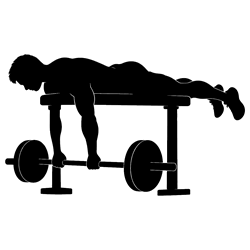
A strict barbell row done lying face down on a high bench: the bar hangs below you and you row it up until it touches the underside of the bench, working your upper back and lats.
- Primary muscles
- Upper back, Lats
- Secondary
- Rear delts, Biceps, Forearm flexors
- Difficulty
- Intermediate
- Logged as
- Weight × reps
Why do it
Seal rows suit lifters who want a heavy back exercise where cheating isn't possible: the bench pins your chest, so your hips and lower back can't help. That makes it a strict alternative to the barbell or Pendlay row, and useful when your lower back is already tired from squats or deadlifts. The catch is the setup, since you need a bench high enough for the plates to hang clear of the floor, often a flat bench on boxes or a dedicated seal row bench.
How to do it
Lie face down on a bench raised high enough that the plates clear the floor with your arms straight.
Grip the bar about shoulder-width apart and let your shoulder blades spread.
Row the bar up until it touches the underside of the bench, squeezing your shoulder blades together.
Lower slowly to a full hang. With your chest pinned to the bench, there is no way to cheat with your hips or lower back.
Common mistakes
Bench too low for a full hang
If the plates touch the floor before your arms straighten, you lose the stretch at the bottom. Raise the bench on blocks or use smaller plates so the bar hangs free.
Arching your chest off the bench
Peeling your chest up to get the bar higher brings the lower back back in. Keep your chest down and accept that the bar stops at the bench.
Craning your neck to look forward
Lifting your head on every rep puts your neck in an awkward position for the whole set. Let your head rest in line with the bench, or turn it to the side.
Letting the bar drop to the hang
Dropping the bar yanks on your shoulders and wastes the lowering half of the rep. Lower it under control until your arms are straight.
Sets, reps and progression
How many sets you do and how close to failure you take them depend on your goal and your week, not on the exercise. These guides cover it:
Alternatives that train the same thing
Same movement, a different angle or piece of equipment.