Split Squat
A stationary lunge: from a long staggered stance with the back heel up, you lower straight down and stand back up without moving your feet, working the quads and glutes.
Equipment
- Primary muscles
- Quads, Glutes
- Secondary
- Hamstrings, Adductors
- Difficulty
- Beginner
- Logged as
- Weight × reps
- Primary muscles
- Quads, Glutes
- Secondary
- Hamstrings, Adductors
- Difficulty
- Beginner
- Logged as
- Reps
Loads from YouTube only when you press play. The video is by an independent creator.
Why do it
Because your feet stay put, it's the easiest single-leg exercise to learn and a natural step before lunges or the rear-foot-elevated version. Both feet stay on the floor, so balance is less of an issue and you can focus on the front leg. Start with bodyweight and a hand on something for balance, then hold dumbbells once you can do clean sets on each leg. It also shows quickly whether one leg is weaker than the other.
How to do it (Dumbbell)
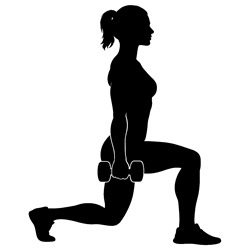
Hold a dumbbell in each hand and take a long step forward into a staggered stance, front foot flat and back heel raised.
Lower straight down until your front thigh is about parallel to the floor and your back knee hovers just above it.
Keep your torso upright and your front knee tracking over your toes.
Push through the front heel to stand, staying in the same stance for the whole set, then switch legs.
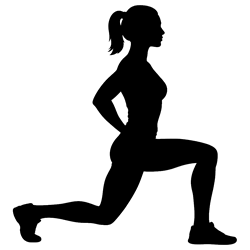
Take a long step forward into a staggered stance, front foot flat and back heel raised, with your hands on your hips.
Lower straight down until your front thigh is about parallel to the floor and your back knee hovers just above it.
Keep your torso upright and your front knee tracking over your toes.
Push through the front heel to stand, staying in the same stance for the whole set, then switch legs. Hold onto something for balance if you need to.
Common mistakes
Stance too short
With your feet close together, the front knee shoots forward and the heel lifts. Take a long step so your back knee can drop straight under your hip.
Feet lined up like on a tightrope
Putting the front and back foot in one line makes you wobble. Keep them about hip-width apart side to side, as if standing on two rails.
Pushing off the back foot
The rear leg is mostly there for balance. Drive through the front heel and let the back foot ride along.
Front knee caving in
Letting the front knee fall inward as you stand usually means the weight is too heavy. Keep it tracking over your toes on the way down and up.
Sets, reps and progression
How many sets you do and how close to failure you take them depend on your goal and your week, not on the exercise. These guides cover it:
Alternatives that train the same thing
Same movement, a different angle or piece of equipment.