Trap Bar Deadlift
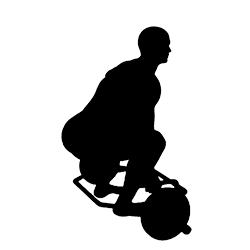
A deadlift with a hexagonal bar you stand inside: you grip the side handles, push the floor away and stand up, with the load in line with your body rather than in front of your shins.
- Primary muscles
- Lower back, Glutes, Hamstrings
- Secondary
- Traps, Forearm flexors, Adductors, Quads
- Difficulty
- Beginner
- Logged as
- Weight × reps
Loads from YouTube only when you press play. The video is by an independent creator.
Why do it
Because the weight sits beside you instead of in front, the trap bar keeps your torso more upright and lets your legs push more than in a straight-bar deadlift. It's easier to learn and usually allows heavier loads, which makes it popular with beginners, athletes and anyone who finds the conventional setup awkward. Many bars have high and low handles: the high ones shorten the pull, and the low ones roughly match a regular deadlift.
How to do it
Stand in the middle of the trap bar with your feet hip- to shoulder-width apart and the handles beside the middle of your feet.
Hinge at your hips and bend your knees to grip the handles, back flat and chest up.
Push the floor away and stand up, keeping your arms straight and the bar hanging in line with your body.
Lower it by pushing your hips back first, then bending your knees. The neutral handles put the load either side of you, which is easier on the lower back than a straight bar.
Common mistakes
Standing off-center in the bar
If the handles sit in front of or behind the middle of your feet, the bar tips as you lift. Line the handles up with your midfoot before you grip.
Sitting too deep at the start
Dropping your hips very low turns it into a squat with weight in your hands and loses the hip drive. Hinge first, then bend your knees just enough to reach the handles.
Leading with your knees on the way down
Bending your knees first turns the lowering into a squat and changes your back angle. Push your hips back first, then bend your knees.
Letting your shoulders round forward
Heavy loads tend to drag your shoulders forward and round your upper back. Lift your chest and pull your shoulder blades down before you push the floor away.
Sets, reps and progression
How many sets you do and how close to failure you take them depend on your goal and your week, not on the exercise. These guides cover it:
Alternatives that train the same thing
Same movement, a different angle or piece of equipment.