Deadlift
You lift a weight from the floor to standing by driving through your legs and extending your hips, the main full-body pull for your hamstrings, glutes and back.
Equipment
- Primary muscles
- Hamstrings, Glutes, Lower back
- Secondary
- Quads, Adductors, Traps, Forearm flexors
- Difficulty
- Intermediate
- Logged as
- Weight × reps
- Primary muscles
- Hamstrings, Glutes, Lower back
- Secondary
- Quads
- Difficulty
- Beginner
- Logged as
- Weight × reps
- Primary muscles
- Hamstrings, Glutes, Lower back
- Secondary
- Adductors
- Difficulty
- Intermediate
- Logged as
- Weight × reps
- Primary muscles
- Hamstrings, Glutes, Lower back
- Secondary
- Quads
- Difficulty
- Beginner
- Logged as
- Weight × reps
Loads from YouTube only when you press play. The video is by an independent creator.
Why do it
The deadlift lets you lift more weight than nearly any other exercise, and it trains the back of your body, your grip and your trunk all at once. The barbell is the standard and the version to measure strength with. The kettlebell version, with the bell between your feet, is the easiest way to learn the pattern; dumbbells at your sides feel similar and suit lighter, higher-rep work. The Smith machine fixes the bar path, which some find reassuring, but you have to fit your stance to the rail instead of the other way around.
How to do it (Barbell)
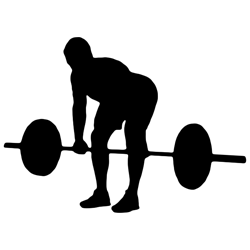
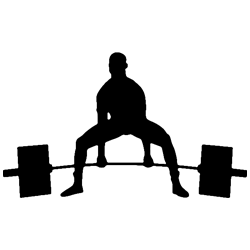
Stand with the bar over your midfoot, feet hip-width apart, and grip it just outside your legs. Use a mixed or hook grip if your hands give out before your back does.
Drop your hips until your shins touch the bar, lift your chest and set your back flat with your shoulders slightly over the bar.
Push the floor away and stand up, keeping the bar in contact with your legs and extending your hips and knees together.
Lower it by hinging at the hips first, then bending your knees once the bar passes them. Reset your position between reps instead of bouncing off the floor.
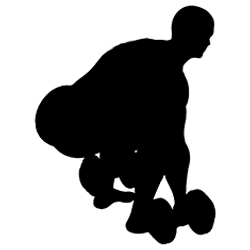
Stand with your feet hip-width apart and a dumbbell on the floor beside each foot.
Hinge at your hips and bend your knees to grip them with your palms facing your legs, back flat and chest up.
Push the floor away and stand up, keeping the dumbbells close to your legs and extending your hips and knees together.
Lower them by pushing your hips back first, then bending your knees. Squeeze your glutes at the top rather than leaning back.
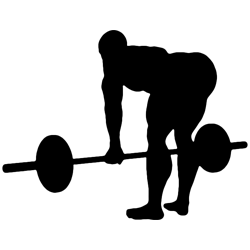
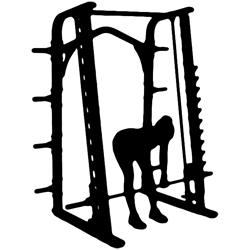
Set the bar at mid-shin height and stand hip-width apart, centred under the bar.
Hinge at your hips and knees to grip the bar, shoulders slightly in front of it and back flat.
Drive through your legs and extend your hips to stand up, keeping the bar close as it follows the fixed path.
Hinge back down under control. Because the bar path is fixed, set your feet slightly forward so the bar doesn't scrape your shins.
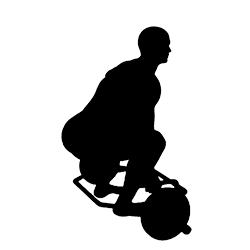
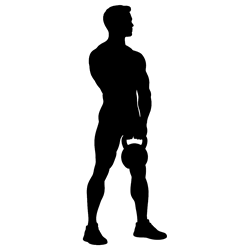
Stand over a kettlebell with your feet about shoulder-width apart, the handle between your heels.
Push your hips back, bend your knees and grab the handle with both hands, back flat and chest up.
Drive your feet into the floor and stand up, keeping the kettlebell close to your body.
Squeeze your glutes at the top, then hinge back down to set it on the floor. The kettlebell's position between your feet makes this the easiest deadlift to learn.
Common mistakes
Starting with the bar too far out
A bar over your toes swings away from you as it leaves the floor. Set it over your midfoot and bring your shins to the bar before you pull.
Rounding your back off the floor
If your back curves as the bar breaks the floor, you weren't set or the weight is too heavy. Lift your chest, flatten your back and take the slack out of the bar first.
Hips shooting up first
When your hips rise before the bar moves, the lift turns into a stiff-legged pull on your lower back. Push the floor away so hips and shoulders rise together.
Bouncing reps off the floor
Touch-and-go reps let you bounce out of the bottom and lose your setup. Set the bar down, reset your back and pull each rep from a dead stop.
Sets, reps and progression
How many sets you do and how close to failure you take them depend on your goal and your week, not on the exercise. These guides cover it:
Alternatives that train the same thing
Same movement, a different angle or piece of equipment.