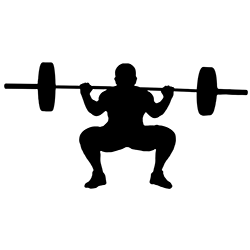
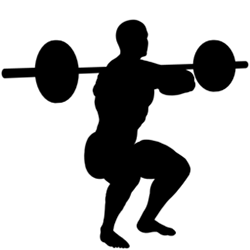
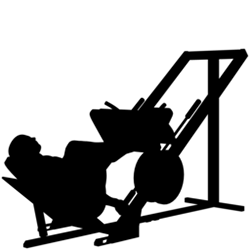
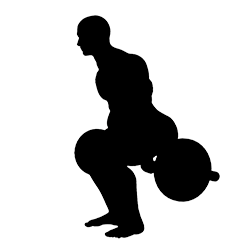
V Squat
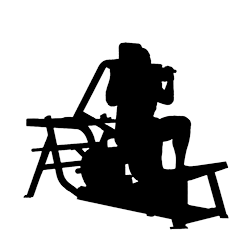
A machine squat with shoulder pads and a back pad on a fixed path: you lower until your thighs are at least parallel and drive back up, working the quads and glutes without balancing a bar.
- Primary muscles
- Quads, Glutes
- Secondary
- Lower back, Adductors
- Difficulty
- Beginner
- Logged as
- Weight × reps
Loads from YouTube only when you press play. The video is by an independent creator.
Why do it
It suits lifters who want to train the squat pattern hard without the balance and bracing demands of a barbell, or who train without a spotter. The fixed path lets you take sets close to failure without worrying about balance. Foot position changes the feel: feet higher on the platform shift more work to the glutes, feet lower put more on the quads. Keep the toes slightly out and your knees following them.
How to do it
Get into the machine with your back against the pad and your shoulders under the pads, feet shoulder-width apart on the platform with your toes turned out slightly.
Release the safety handles and brace your core.
Lower yourself until your thighs are at least parallel to the platform, keeping your knees tracking over your toes.
Drive back up, stopping just short of locking your knees. The fixed path lets you push close to failure without worrying about balance.
Common mistakes
Lower back peeling off the pad
At the bottom, your hips can tuck and your back rounds away from the pad. Stop just before that happens and keep your back pressed in.
Locking the knees at the top
Snapping straight takes the tension off your legs. Stop just short of lockout, as the steps say, and keep the set moving.
Heels lifting off the platform
If your heels rise at the bottom, your feet are probably too low. Move them up a little and drive through your whole foot.
Cutting the range to move more weight
Loading the machine heavy and doing quarter reps skips most of the work. Pick a weight you can lower until your thighs are at least parallel.
Sets, reps and progression
How many sets you do and how close to failure you take them depend on your goal and your week, not on the exercise. These guides cover it:
Alternatives that train the same thing
Same movement, a different angle or piece of equipment.