
How to Count Macros: A Beginner's Guide to Tracking
Counting macros is four habits: targets you trust, a food scale, logging as you eat, and a weekly check against the scale. This guide walks through each step, works through a real day of food, and covers the mistakes that make logs useless.
By Jobri Fitness
6 min read
The short answer
Get calorie and macro targets, weigh and log what you eat as you eat it, make sure calories and protein land close every day, and let carbs and fat move around. Then compare a week of logs with your weight trend before you change anything. That's the whole method. The rest is making it quick enough to keep doing.
Step 1: Get your targets
You need four numbers: calories, protein, fat and carbs. The macro calculator works them out from your body, activity and goal. It sets protein from your body weight, fat as a share of calories, and carbs from whatever is left.
If you only want the calorie number, the daily calorie needs calculator gives you that, and it's the same estimate the macro calculator starts from.
Both are starting points. Your own logs will correct them within a few weeks, and step 4 shows how.
Step 2: Weigh and log what you eat
Eyeballing portions is where most logs go wrong, so for the first couple of weeks, weigh things.
- Use a kitchen scale and grams. Cups and spoons vary a lot with how you fill them. A scale doesn't.
- Match the state of the food to the entry. Cooked rice and pasta weigh far more than dry because they soak up water, and meat loses water as it cooks. Weigh raw and pick a raw entry, or weigh cooked and pick a cooked one. Mixing the two is one of the biggest silent errors.
- Scan barcodes for packaged food. It's fast and usually close. Labels aren't exact, though: US rules let a food contain up to 20% more calories or fat than its label says before it counts as mislabeled. Close is the goal, not perfect.
- Log cooking oil, sauces and drinks. Fat has more than twice the calories per gram of protein or carbs, and the oil in the pan never shows up on the plate.
- Log a recipe as servings. Enter the dish once, then log the share you ate. Recipes with nutrition per serving, like the ones on this site, save you the work.
- Estimate when you eat out. Pick the closest entry, guess the portion, log it and move on. One rough meal won't spoil a week of good logs. Skipping it will.
Step 3: Know which numbers matter
You won't hit four numbers exactly every day, and you don't need to.
- Calories decide whether you lose, keep or gain weight. Get them close every day.
- Protein is the macro that protects and builds muscle. Get at least your target every day. A bit over is fine.
- Carbs and fat fill the rest. If one is high and the other low but calories are on target, the day still worked. Over a week they'll even out.
So if you're short on time, track calories and protein properly and let carbs and fat be approximate. That's most of the result for a fraction of the effort.
Step 4: Review once a week
Day-to-day weight jumps around with water, salt and how full your gut is, so don't judge your targets on a single weigh-in. Once a week, compare your average daily calories with your weight trend:
- Weight moving the way you want, at the pace you want: keep the targets.
- Moving too slowly or not at all for 2 to 3 weeks: adjust calories a little and keep protein where it is.
- Moving too fast: add some calories back, mostly as carbs.
Change one thing at a time and give it two or three weeks. How to build muscle and lose fat walks through this correction step by step, and macros for weight loss covers how to split a diet's calories in the first place.
A day of macros, worked through
Here's a day built from four recipes on this site, logged against targets of about 2,750 kcal, 125 g protein, 75 g fat and 390 g carbs. Those are the maintenance targets from the macro calculator's worked example for a moderately active man.
| Meal | Food | kcal | Protein | Carbs | Fat |
|---|---|---|---|---|---|
| Breakfast | High-protein breakfast burrito, 1 burrito | 581 | 48.6 g | 31.8 g | 28.2 g |
| Lunch | Creamy Cajun chicken pasta, 1 serving | 602 | 39.3 g | 83.5 g | 11.3 g |
| Snack | Protein marble cheesecake, half | 359 | 38.8 g | 33.5 g | 8.7 g |
| Dinner | Beef and sweet potato hash, 1 serving | 566 | 52 g | 51.1 g | 16.7 g |
| Total | 2,108 | 178.7 g | 199.9 g | 64.9 g | |
| Target | 2,750 | 125 g | 390 g | 75 g |
How to read it:
- Protein: about 179 g, well over the target. That's fine. The target is a minimum, not a limit.
- Calories: about 650 short. That's the number to fix, because a gap this size every day turns a maintenance plan into a diet.
- Carbs: about 200 g against 390 g. Nearly all of the calorie gap is missing carbs, which is typical when a day is built only from high-protein dishes.
- Fat: a little under, close enough.
The fix is simple: add a carb-heavy side, like rice, potatoes, bread or fruit, to two or three of the meals. You don't need to touch the protein.
Common mistakes
- Logging from memory at the end of the day. People leave out more than they think. In one study, dieters who said they ate under 1,200 kcal a day and still couldn't lose weight were eating almost half again as much as they reported. Log as you eat.
- Forgetting what doesn't look like food. Oil, butter, dressings, sauces, milk in coffee, juice and alcohol.
- Changing targets after three days. A few days of weigh-ins mostly show water. Wait for two or three weeks of trend.
- Treating every gram as exact. Labels, databases and your scale are all a little off. Consistency matters more than precision, because a consistent error still shows up in your weight trend and gets corrected there.
- Chasing a perfect carb and fat split. Calories and protein do most of the work. Don't redo a day's meals for 10 g of fat.
When counting isn't a good idea
Counting macros is a tool, not a requirement. If you have a history of disordered eating, or if tracking leaves you anxious about food, talk to a doctor or registered dietitian before you start, and don't push through it alone. Physique sports carry an increased risk of eating and body image disorders, and precise tracking can feed that.
A lighter option for everyone else: track only calories and protein, or only protein, and keep a rough eye on the rest.
Counting macros in GymEvo
GymEvo's food log is free: barcode scanning, a food database, quick calorie and macro entries for when you can't find a food, recipes logged by servings, and your macros per meal and per day against your targets. The calorie target can follow your weigh-ins automatically, which saves you the weekly correction in step 4. AI estimates from a meal photo or a spoken description are part of Premium. See GymEvo's free calorie counter.
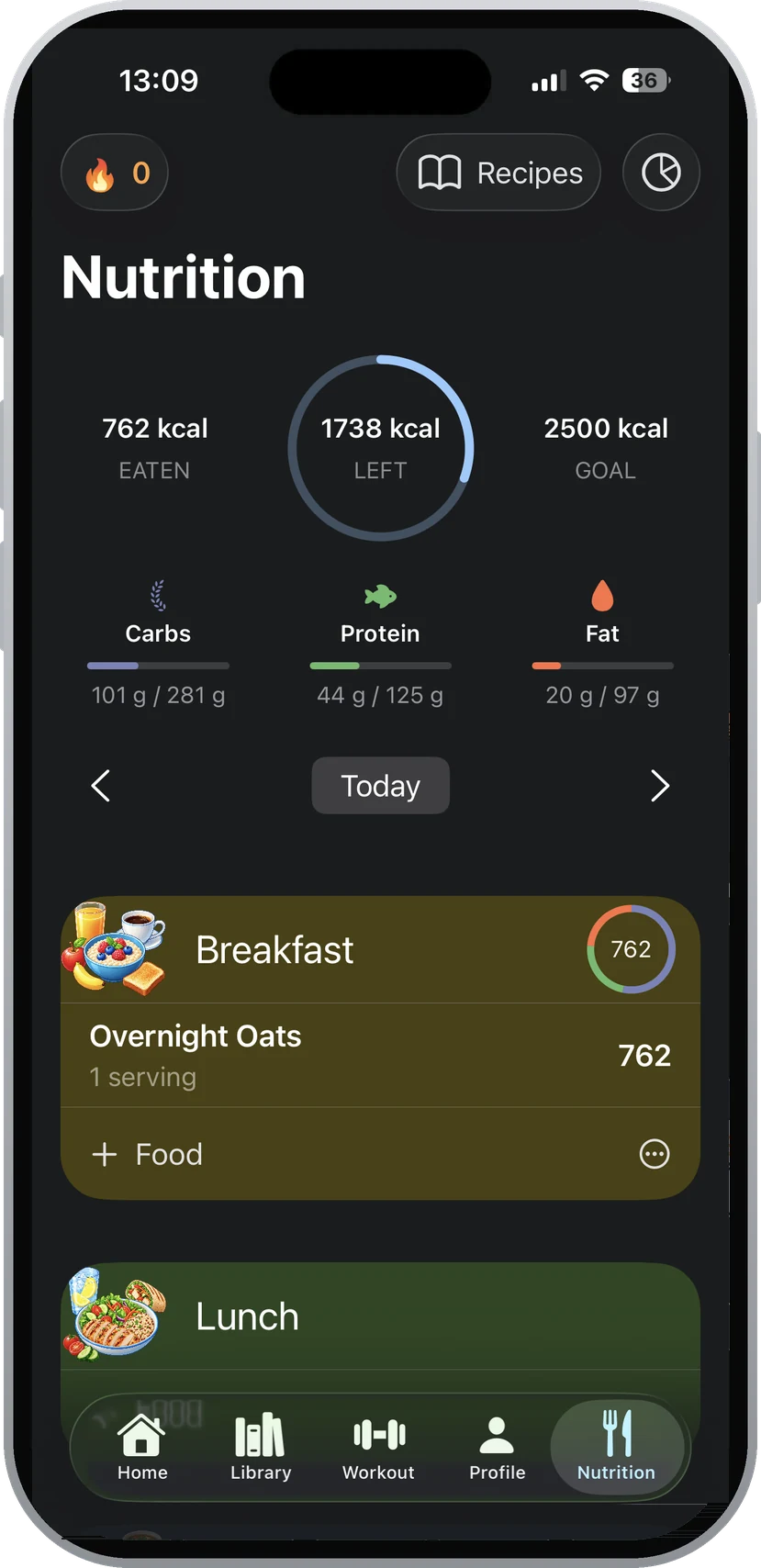 The nutrition tab: calories eaten and left, and each macro against its target.
Sources
- 21 CFR 101.9, Nutrition labeling of food, Electronic Code of Federal Regulations (accessed 2026-10-18)
- Discrepancy between Self-Reported and Actual Caloric Intake and Exercise in Obese Subjects, New England Journal of Medicine (accessed 2026-10-18)
- Evidence-based recommendations for natural bodybuilding contest preparation: nutrition and supplementation, Journal of the International Society of Sports Nutrition (accessed 2026-10-18)
- Macro Calculator: Protein, Carbs and Fat for Your Goal (GymEvo, the publisher's own tool), Jobri Fitness (accessed 2026-10-18)
- How to Build Muscle and Lose Fat at the Same Time (GymEvo, the publisher's own page), Jobri Fitness (accessed 2026-10-18)
- GymEvo app capabilities, Jobri Fitness (accessed 2026-10-18)
- GymEvo Free vs Premium: What You Get and When to Upgrade, Jobri Fitness (accessed 2026-10-18)
Keep reading



Start tracking your training
Download GymEvo and keep your workouts, nutrition, and progress in one place.