Band-Assisted Nordic Hamstring Curl
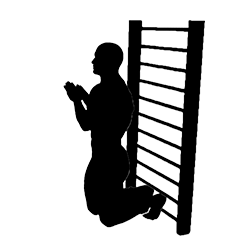
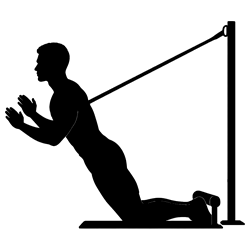
Kneeling with your ankles held down and a band around your chest, you lower your body forward as slowly as you can while the band takes some weight off your hamstrings.
- Primary muscles
- Hamstrings
- Secondary
- Lower back, Abs, Glutes, Calves
- Difficulty
- Intermediate
- Logged as
- Assistance × reps
Loads from YouTube only when you press play. The video is by an independent creator.
Why do it
Nordic curls are one of the hardest hamstring exercises, and most people can't control the full lowering at first. The band from behind takes part of your body weight, so you can practice the whole range with control. That makes it the natural step for anyone working toward unassisted Nordics. A stronger band gives more help, so progress by moving to lighter bands until you no longer need one.
How to do it
Tie a band to an anchor high behind you and loop it around your chest under your arms. Kneel on a mat with your ankles held down behind you and your body upright from knees to head.
Lower your body forward as slowly as you can, keeping your hips straight and letting the band take some of your weight.
When you can no longer control the descent, catch yourself with your hands.
Pull yourself back up with your hamstrings, pushing off lightly with your hands if needed. Log the band you used; a lighter band counts as progress, until you can do Nordic curls without one.
Common mistakes
Bending at the hips
Piking your hips back shortens the lever and takes load off your hamstrings. Keep a straight line from knees to head and squeeze your glutes.
Using a band that's too strong
If the band lets you lower slowly all the way down without a fight, it's doing too much. Pick one that lets you control most of the range, but not quite all of it.
Falling the last part of the way
Dropping once control runs out wastes the effort and lands you hard. Have your hands ready and catch yourself softly as soon as you can't hold the descent.
Anchoring the band too low
If the anchor sits below your chest, the band pulls you down instead of back. Fix it high behind you so it pulls up and back as you lean forward.
Sets, reps and progression
How many sets you do and how close to failure you take them depend on your goal and your week, not on the exercise. These guides cover it:
Alternatives that train the same thing
Same movement, a different angle or piece of equipment.