Band Chest Fly
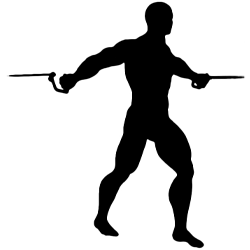
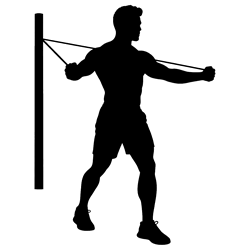
With a band anchored behind you at chest height, you sweep your arms from wide open to together in front of your chest, keeping a soft bend in your elbows.
- Primary muscles
- Upper chest, Middle chest, Lower chest
- Secondary
- Front delts, Biceps
- Difficulty
- Beginner
- Logged as
- Band × reps
Loads from YouTube only when you press play. The video is by an independent creator.
Why do it
A band fly gives you cable-style chest isolation with nothing more than a band and a sturdy anchor point. The band gets harder the further it stretches, so the effort peaks where your hands meet and eases off in the stretch, the opposite of a dumbbell fly. That makes it a good fit for high-rep finishing sets and for warming up your chest before pressing. Progress by stepping further from the anchor or switching to a stronger band.
How to do it
Anchor a band at chest height behind you and hold one end in each hand with your arms open wide at chest height, elbows slightly bent. Step forward until the band is taut.
Bring your hands together in front of your chest in a wide arc, keeping the bend in your elbows the same.
Squeeze your chest for a moment when your hands meet.
Open your arms slowly until you feel a stretch across your chest. Log the band you used; a stronger band counts as progress.
Common mistakes
Bending your elbows into a press
As the band gets heavier near the end, it's tempting to bend your arms and push. Keep the same slight elbow bend and close the arc with your chest.
Letting the band snap your arms open
If your arms fly back on the way out, you lose half the work of each rep. Open slowly against the band until you feel a stretch.
Slack band at the start
Standing too close to the anchor leaves the band loose when your arms are wide. Step forward until it's taut before the first rep.
Hands drifting off chest height
Hands rising toward your face or dropping to your belly changes the angle of pull. Keep them level with your chest and the anchor.
Sets, reps and progression
How many sets you do and how close to failure you take them depend on your goal and your week, not on the exercise. These guides cover it:
Alternatives that train the same thing
Same movement, a different angle or piece of equipment.