Incline Chest Fly
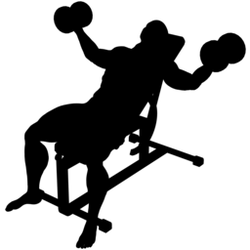
Lying on an incline bench, you lower two dumbbells out to your sides in a wide arc and bring them back together above your shoulders, focusing on your upper chest.
- Primary muscles
- Upper chest
- Secondary
- Middle chest, Lower chest, Front delts, Biceps
- Difficulty
- Beginner
- Logged as
- Weight × reps
Loads from YouTube only when you press play. The video is by an independent creator.
Why do it
The incline fly isolates your upper chest after your presses, using only dumbbells and an adjustable bench. The tilt moves the work toward the upper chest, so you'll use less weight than on a flat fly. Like other dumbbell flies, it's hardest in the stretch and nearly unloaded at the top, so the bottom half is where the work happens. Choose it over cable versions if you like a deep stretch or don't have a cable station.
How to do it
Set a bench to 30-45 degrees, lie back with your feet on the floor and press the dumbbells above your shoulders, palms facing each other.
Keep a slight, fixed bend in your elbows and your shoulder blades pulled back.
Lower the dumbbells out to the sides in a wide arc until you feel a stretch across your upper chest.
Bring them back together along the same arc using your chest. The incline shifts the work toward the upper chest, so you'll need less weight than on a flat fly.
Common mistakes
Shoulder blades coming off the bench
If your shoulders roll forward as you lower, the stretch moves to the front of your shoulders. Keep your shoulder blades pulled back throughout.
Pressing the weights back up
If your elbows bend more on the way up, the fly becomes a press. Keep the same slight bend and bring the dumbbells back along the arc.
Dumbbells drifting toward your hips
The weights should open out to your sides in line with your upper chest. Letting them drift down toward your hips flattens the angle.
Using your flat-fly weights
The incline makes the same dumbbells feel heavier. Start lighter than on your flat fly so you can control the stretch.
Sets, reps and progression
How many sets you do and how close to failure you take them depend on your goal and your week, not on the exercise. These guides cover it:
Alternatives that train the same thing
Same movement, a different angle or piece of equipment.