Band Overhead Triceps Extension
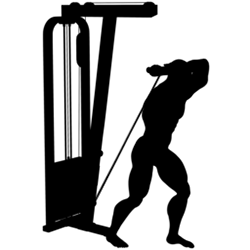
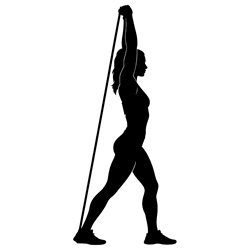
Standing in a split stance on one end of a band, you hold the other end behind your head and straighten your arms overhead, training the triceps with your arms raised.
- Primary muscles
- Triceps
- Difficulty
- Beginner
- Logged as
- Band × reps
Loads from YouTube only when you press play. The video is by an independent creator.
Why do it
Overhead positions stretch the triceps more than pushdowns do, and a band lets you train that way anywhere. The band is lightest at the bottom, behind your head, and hardest at lockout, which is the reverse of a dumbbell overhead, so the stretched position gets relatively little load. That makes it a good home or travel option, a warm-up before pressing, or a high-rep finisher rather than your main heavy triceps exercise. Step further onto the band or use a stronger one to progress.
How to do it
Stand in a split stance with your back foot on one end of a band and hold the other end with both hands behind your head, elbows bent and pointing up.
Extend your arms until your hands are straight above your head.
Keep your elbows close to your head and still; only your forearms move.
Lower your hands slowly behind your head. Log the band you used; a stronger band counts as progress.
Common mistakes
Letting your elbows flare
As the band pulls, your elbows tend to drift out to the sides. Keep them close to your head and pointing up so only your forearms move.
Arching your back at lockout
Leaning back to straighten your arms against the band takes the triceps out of it. Brace your core in the split stance and keep your ribs down.
Starting with a slack band
If the band has no tension behind your head, the bottom half of the rep is wasted. Step further onto it or hold it lower so it's taut from the start.
Letting the band pull your hands back
The band snaps your hands behind your head if you let it. Lower slowly against it, with the same control you used on the way up.
Sets, reps and progression
How many sets you do and how close to failure you take them depend on your goal and your week, not on the exercise. These guides cover it:
Alternatives that train the same thing
Same movement, a different angle or piece of equipment.