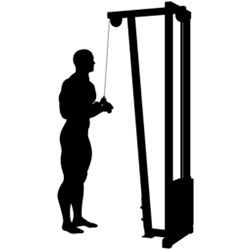
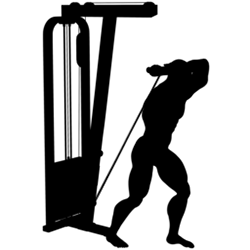
Band Pushdown
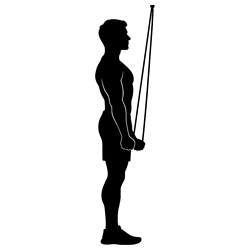
With a band anchored overhead, you hold an end in each hand at chest height and press down until your arms are straight, working the triceps without a cable machine.
- Primary muscles
- Triceps
- Difficulty
- Beginner
- Logged as
- Band × reps
Loads from YouTube only when you press play. The video is by an independent creator.
Why do it
It copies the cable pushdown for home, hotel or warm-up use. The band gets harder as it stretches, so the load peaks as your arms straighten, right where the triceps squeeze hardest, and eases off at the top. Holding two separate ends lets your hands spread apart at the bottom, which many people find comfortable on the wrists. Use it for high reps, pump work or a quick finisher, and move to a stronger band when reps get easy.
How to do it
Anchor a band overhead and hold one end in each hand in front of your chest, elbows bent and tucked at your sides.
Press your hands down until your arms are straight, keeping your elbows still.
Squeeze your triceps at the bottom without leaning forward.
Let your hands rise slowly back to chest height. Log the band you used; a stronger band counts as progress.
Common mistakes
Standing too close to the anchor
If the band is slack at the top, the first part of the rep does nothing. Step back until there's tension with your hands at chest height.
Leaning over the band
Bending forward at the hips lets your bodyweight push the band down. Stand tall and keep the work in your triceps.
Letting the band lift your elbows
The band pulls hard on the way back up and drags your elbows forward with it. Keep them tucked at your sides and let your hands rise slowly to chest height.
Stopping just short of straight
The band is hardest at the bottom, so it's tempting to turn around early. Push until your arms are fully straight and squeeze for a moment.
Sets, reps and progression
How many sets you do and how close to failure you take them depend on your goal and your week, not on the exercise. These guides cover it:
Alternatives that train the same thing
Same movement, a different angle or piece of equipment.