Band Romanian Deadlift
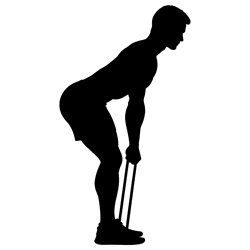
Standing on a band with an end in each hand, you push your hips back and lower your hands along your legs, then drive your hips forward to stand, working hamstrings and glutes.
- Primary muscles
- Hamstrings, Glutes
- Secondary
- Lower back, Adductors
- Difficulty
- Beginner
- Logged as
- Band × reps
Loads from YouTube only when you press play. The video is by an independent creator.
Why do it
The band version keeps the Romanian deadlift pattern but swaps the bar for elastic, so you can practice the hinge at home, while traveling or as a warm-up. The band is lightest at the bottom, in the stretch, and heaviest as you stand up, so the hamstring stretch is gentler than with a barbell and your glutes work hardest at lockout. It's a good fit for beginners learning to hinge; for heavier hamstring loading, move on to dumbbells or a barbell.
How to do it
Stand on the middle of a band with your feet hip-width apart and hold one end in each hand in front of your thighs, arms straight.
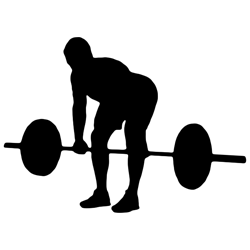
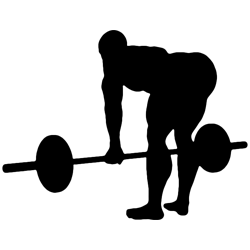
With a slight bend in your knees, push your hips back and lower your hands along your legs until you feel a stretch in your hamstrings, keeping your back flat.
Drive your hips forward to stand tall, squeezing your glutes at the top.
Keep the band close to your legs and your arms straight; the hips do the work. Log the band you used; a stronger band counts as progress.
Common mistakes
Bending your knees too much
Sinking your hips turns the hinge into a squat and takes the stretch off your hamstrings. Keep a slight, fixed knee bend and move only at your hips.
Rounding your back to reach lower
Chasing your toes with a rounded back loses the hinge. Lower only until you feel the hamstring stretch, with your back flat.
Letting the band drift forward
If your hands move away from your legs, your lower back takes more of the load. Keep the band close to your thighs and shins the whole way.
Standing on the band off-center
With the band under your toes or mostly under one foot, it can slip or pull unevenly. Stand on its middle with both feet and check before each set.
Sets, reps and progression
How many sets you do and how close to failure you take them depend on your goal and your week, not on the exercise. These guides cover it:
Alternatives that train the same thing
Same movement, a different angle or piece of equipment.