Chest-Pullover
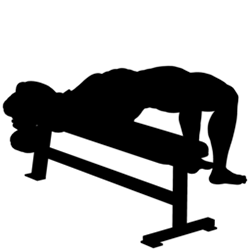
Lying on a bench, you lower one dumbbell held in both hands back over your head in an arc and pull it back over your chest, keeping your arms nearly straight.
- Primary muscles
- Upper chest, Middle chest, Lower chest
- Secondary
- Lats
- Difficulty
- Beginner
- Logged as
- Weight × reps
Loads from YouTube only when you press play. The video is by an independent creator.
Why do it
The pullover trains your chest through a stretch over your head, which no press or fly does, with your lats helping. It suits you as an extra chest exercise after pressing, or when you want one dumbbell move that touches both chest and back. Elbow position sets the focus: long arms and tucked elbows keep it on your chest, while flared elbows bring in more lats. Go only as deep as your shoulders comfortably allow and use a moderate weight.
How to do it
Lie flat on a bench with your head near the end and hold one dumbbell with both hands over your chest, arms almost straight.
Lower it back over your head in an arc, keeping your arms long and your elbows in.
Go as far as your shoulders comfortably allow, roughly to head level.
Pull it back over your chest along the same arc. Straighter arms and tucked elbows keep the chest working. Letting the elbows flare shifts the load to the lats.
Common mistakes
Letting your elbows flare
When your elbows drift out, your lats take over. Keep them tucked in and your arms long throughout.
Lowering far past your head
Pushing the dumbbell well below head level loads your shoulders more than your chest. Stop around head level, or earlier if your shoulders feel tight.
Bending and straightening your arms
Turning it into a triceps extension moves the weight with your elbows. Keep the slight bend fixed and move only at the shoulders.
Arching your lower back
Letting your ribs flare and your back arch as the weight goes overhead makes the range look bigger than it is. Keep your ribs down and your lower back steady.
Sets, reps and progression
How many sets you do and how close to failure you take them depend on your goal and your week, not on the exercise. These guides cover it:
Alternatives that train the same thing
Same movement, a different angle or piece of equipment.