Dead Hang
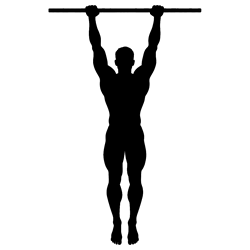
You hang from a pull-up bar with straight arms for time, a simple hold that builds grip endurance and gets your shoulders used to supporting your body weight.
- Primary muscles
- Forearm flexors
- Secondary
- Lats, Upper back
- Difficulty
- Beginner
- Logged as
- Time
Loads from YouTube only when you press play. The video is by an independent creator.
Why do it
The dead hang is the simplest grip test there is: hold on for as long as you can. It suits beginners working toward their first pull-up, climbers and anyone whose grip gives out on deadlifts or rows. It trains grip endurance rather than pulling strength, and that endurance is what most people run out of first. Once a long two-hand hang feels easy, progress to one arm at a time or add weight rather than just hanging longer.
How to do it
Grab a pull up bar with an overhand grip about shoulder-width apart.
Lift your feet off the floor and hang with your arms straight.
Keep your shoulders engaged, pulling them slightly down rather than letting them ride up to your ears.
Hang for the set time and step down under control. Use a single arm or add weight once two minutes feels easy.
Common mistakes
Letting your shoulders ride up to your ears
Hanging completely loose lets your shoulders creep up and nothing around them is working. Pull them slightly down and hold that position for the whole hang.
Bending your elbows
A slight bend turns the hang into a half pull-up and tires your arms first. Keep your arms straight and let your hands and forearms do the holding.
Leaving your thumb off the bar
A thumbless grip slips sooner and cuts the hold short. Wrap your thumb around the bar and squeeze hard from the first second.
Kicking and swinging
Moving your legs starts a swing, and you end up fighting to stay on the bar. Step up from a box or the floor, still your body, then start the clock.
Sets, reps and progression
How many sets you do and how close to failure you take them depend on your goal and your week, not on the exercise. These guides cover it:
Alternatives that train the same thing
Same movement, a different angle or piece of equipment.