Seated Reverse Wrist Curl
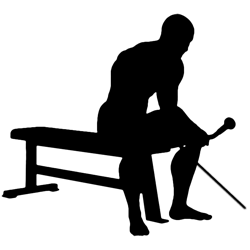
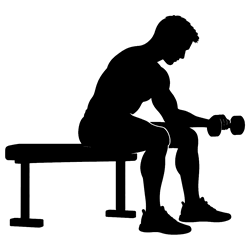
Sitting with your forearms on your thighs and palms facing down, you raise the back of your hand by bending at the wrist, training the extensors on top of your forearm.
Equipment
- Primary muscles
- Forearm extensors
- Difficulty
- Beginner
- Logged as
- Weight × reps
- Primary muscles
- Forearm extensors
- Difficulty
- Beginner
- Logged as
- Weight × reps
Loads from YouTube only when you press play. The video is by an independent creator.
Why do it
Most forearm work hits the flexors on the palm side; this one trains the extensors on the back of your forearm, which often lag behind. It's a useful addition for anyone doing lots of gripping and pulling who wants balanced forearms. The extensors are weak, so expect to use far less weight than on a regular wrist curl. The dumbbell version works one arm at a time and lets each wrist move freely, while the barbell trains both sides at once and saves time.
How to do it (Dumbbell)
Sit on a bench and rest your forearm on your thigh with your wrist just past your knee, palm facing down, a dumbbell in your hand.
Let your wrist drop so the dumbbell hangs toward the floor.
Raise the back of your hand as high as it goes and squeeze the top of the forearm.
Lower slowly and repeat, then switch arms. Use a light weight; the extensors are much weaker than the flexors.
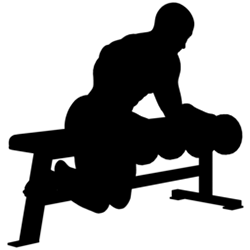
Sit on a bench with your feet flat and hold a barbell overhand at about shoulder width.
Rest your forearms on your thighs with your wrists just past your knees, palms facing down.
Lift the bar by extending your wrists as far as they go, keeping your forearms still.
Lower it slowly for a full stretch. The wrist extensors are small, so light weight and higher reps work better here than heavy loading.
Common mistakes
Loading it like a regular wrist curl
The extensors are much weaker than the flexors, so a weight that's easy palms up will stall here. Start very light and use higher reps.
Lifting your forearm off your thigh
When the forearm comes up, your elbow and shoulder start helping. Keep your forearm pressed down so only your hand moves.
Cutting the range short
Small pulses near the top miss the stretch at the bottom. Let your wrist drop fully, then raise the back of your hand as high as it goes.
Letting the weight fall
Dropping the weight yanks your wrist into the bottom position. Lower slowly; the controlled way down is half of what makes this work.
Sets, reps and progression
How many sets you do and how close to failure you take them depend on your goal and your week, not on the exercise. These guides cover it:
Alternatives that train the same thing
Same movement, a different angle or piece of equipment.