Decline Push Up
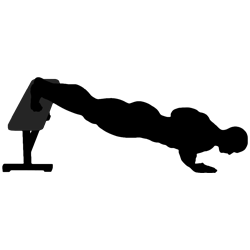
A push-up with your feet up on a bench or box, which tilts your body head-down and moves more of the work to your upper chest and front shoulders.
- Primary muscles
- Upper chest
- Secondary
- Middle chest, Lower chest, Front delts, Triceps
- Difficulty
- Intermediate
- Logged as
- Reps
Loads from YouTube only when you press play. The video is by an independent creator.
Why do it
Raising your feet puts more of your body weight on your hands and changes the pressing angle, so this is harder than a floor push-up and leans on your upper chest and shoulders. It suits you once regular push-ups are easy and you want progress without equipment. The higher the box, the harder it gets and the more your shoulders take over, so start with a low step. Keep your body straight the whole time, since the angle makes your hips more likely to sag.
How to do it
Place your feet on a stable bench or box and your hands on the floor slightly wider than shoulder-width.
Set your shoulders over your wrists with your body in a straight line from head to heels.
Lower your chest toward the floor with your elbows at roughly 45 degrees to your torso.
Press back up without letting your hips sag. Elevating your feet shifts more of the load onto the upper chest and shoulders, so it's harder than a flat push-up.
Common mistakes
Hips sagging toward the floor
With your feet up, your hips drop more easily than on the floor. Squeeze your glutes and brace so you stay in a straight line.
Piking your hips up
Raising your hips turns it into a pike push-up with less chest work. Keep your hips in line with your shoulders and heels.
Starting on a high box
A very high box makes it mostly a shoulder exercise and hard to control. Start on a low step and raise it gradually.
Reaching for the floor with your chin
Dropping your head fakes depth while your chest stays high. Keep your neck neutral and lower your chest toward the floor.
Sets, reps and progression
How many sets you do and how close to failure you take them depend on your goal and your week, not on the exercise. These guides cover it:
Alternatives that train the same thing
Same movement, a different angle or piece of equipment.