Deficit Push Up
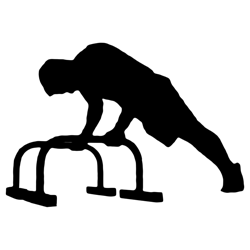
A push-up with your hands on blocks or parallettes, so your chest can sink below hand level for a deeper stretch than the floor allows.
- Primary muscles
- Upper chest, Middle chest, Lower chest
- Secondary
- Front delts, Triceps
- Difficulty
- Intermediate
- Logged as
- Reps
Loads from YouTube only when you press play. The video is by an independent creator.
Why do it
Raising your hands adds range at the bottom, where your chest is most stretched, so the deficit push-up makes the same movement harder without adding weight. It suits you when floor push-ups are getting easy and you want more out of each rep, or as a bodyweight option when you can't load up. Add depth gradually; a low deficit is plenty at first. If the bottom feels uncomfortable in your shoulders, use lower blocks.
How to do it
Place two stable blocks or parallettes slightly wider than shoulder-width apart and put a hand on each.
Set up in a push-up position with your shoulders over your hands and your body in a straight line.
Lower your chest below the level of your hands, going deeper than a floor push-up allows.
Press back up to straight arms. The extra depth stretches the chest more, so expect fewer reps than usual at first.
Common mistakes
Going deeper than you can control
Extra depth only helps while you own it. Lower until your chest is just below your hands, not as far as you can collapse.
Using blocks that shift
Stacked books, loose plates or wobbly boxes can move mid-rep. Use parallettes or solid blocks that stay put.
Hips dropping first at the bottom
The deeper stretch makes it tempting to let your hips sink before your chest. Keep one straight line from head to heels.
Not using the extra depth
Stopping at hand level turns it into a normal push-up on blocks. Use the full range, or lower the blocks until you can.
Sets, reps and progression
How many sets you do and how close to failure you take them depend on your goal and your week, not on the exercise. These guides cover it:
Alternatives that train the same thing
Same movement, a different angle or piece of equipment.