Diamond Push Up
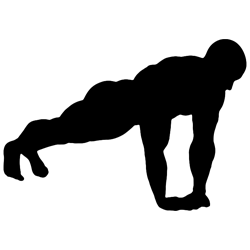
A push-up with your hands close together under your chest, thumbs and index fingers forming a triangle, which puts much of the work on your triceps.
- Primary muscles
- Upper chest, Middle chest, Lower chest, Triceps
- Secondary
- Front delts
- Difficulty
- Intermediate
- Logged as
- Reps
Loads from YouTube only when you press play. The video is by an independent creator.
Why do it
Bringing your hands together makes this one of the most triceps-heavy bodyweight presses, while your chest still does plenty. It suits you once regular push-ups feel easy, and it's a handy no-equipment option for arm days. It's harder than a standard push-up, so expect fewer reps. If the tight triangle bothers your wrists, set your hands a little apart; you keep most of the triceps work.
How to do it
Get into a push-up position with your hands together under your chest, thumbs and index fingers forming a triangle.
Keep your body in a straight line from head to heels with your core tight.
Lower your chest to your hands with your elbows tracking close to your sides.
Press back up to straight arms. If the narrow hand position bothers your wrists, move your hands a few centimetres apart; most of the triceps work stays.
Common mistakes
Elbows flaring out
With your hands this close, the elbows tend to point outward, which takes the triceps out of it. Keep them tracking close to your sides.
Hands too far forward
Placing the diamond under your face makes the bottom awkward and shifts the load to your shoulders. Set it under your chest.
Lowering only halfway
Narrow push-ups get hard at the bottom, so reps shrink as you tire. Bring your chest to your hands on each rep.
Forcing the triangle through wrist pain
If the hand shape hurts your wrists, stop and widen your hands a little. You'll keep most of the triceps work.
Sets, reps and progression
How many sets you do and how close to failure you take them depend on your goal and your week, not on the exercise. These guides cover it:
Alternatives that train the same thing
Same movement, a different angle or piece of equipment.