Floor Press
Lying on the floor with your knees bent, you lower the weight until your upper arms touch the ground and press it back up, so the floor cuts off the bottom of the range.
Equipment
- Primary muscles
- Upper chest, Middle chest, Lower chest
- Secondary
- Front delts, Triceps
- Difficulty
- Beginner
- Logged as
- Weight × reps
- Primary muscles
- Upper chest, Middle chest, Lower chest
- Secondary
- Front delts, Triceps
- Difficulty
- Beginner
- Logged as
- Weight × reps
- Primary muscles
- Upper chest, Middle chest, Lower chest
- Secondary
- Front delts, Triceps
- Difficulty
- Beginner
- Logged as
- Weight × reps
Loads from YouTube only when you press play. The video is by an independent creator.
Why do it
The floor press is a bench press with a built-in stopping point. Losing the bottom of the range takes the stretch off your shoulders and shifts the work toward your triceps and lockout, so it suits you if you want a stronger finish or find a full-depth press uncomfortable. It's also an option at home with no bench. The barbell loads heaviest but needs a rack set low, dumbbells are simpler to get into position, and kettlebells work well for lighter, paused sets.
How to do it (Barbell)
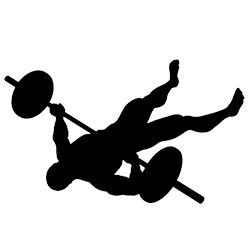
Lie on your back on the floor under a barbell in a rack, knees bent and feet flat.
Grip the bar slightly wider than shoulder-width and unrack it over your chest with straight arms.
Lower it until your upper arms touch the floor, keeping your elbows at roughly 45 degrees to your body.
Press back up. The floor cuts the bottom of the range, which takes the stretch off your shoulders and shifts the work toward your triceps and lockout strength.
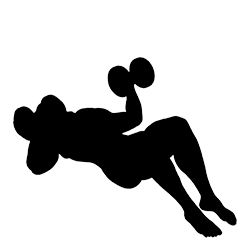
Sit on the floor with a dumbbell in each hand, then lie back and bring them to your sides.
Bend your knees with your feet flat and hold the dumbbells above your elbows, palms facing your feet.
Press them up and slightly together until your arms are nearly straight.
Lower them until your upper arms touch the floor. The floor gives you a consistent stopping point, which makes it easy to keep every rep the same depth.
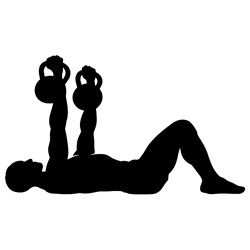
Lie on your back with your knees bent and hold a kettlebell in each hand at chest level, bells resting on the backs of your forearms.
Press the kettlebells straight up until your arms are locked out.
Lower under control until your upper arms rest lightly on the floor.
Pause there for a moment, then press again. The floor stops the stretch early, which makes this easy on the shoulders.
Common mistakes
Bouncing your elbows off the floor
Dropping your arms into the floor and rebounding removes the dead stop that makes this useful. Let your upper arms touch down lightly, then press.
Elbows flared straight out
With your elbows out at your sides, they hit the floor hard and the weight sits too high on your chest. Keep them partway tucked toward your body.
Lying with straight legs
With your legs flat, your hips and lower back shift around as you press. Bend your knees and plant your feet for a stable base.
Rack hooks set too high
If you have to reach for the bar, you unrack it out of position. Set the hooks so you can lift the bar out with slightly bent arms.
Sets, reps and progression
How many sets you do and how close to failure you take them depend on your goal and your week, not on the exercise. These guides cover it:
Alternatives that train the same thing
Same movement, a different angle or piece of equipment.