Front Raise
A shoulder isolation exercise where you lift a weight straight in front of you with nearly straight arms until your hands reach shoulder height, training the front delts.
Equipment
- Primary muscles
- Front delts
- Secondary
- Side delts, Serratus
- Difficulty
- Beginner
- Logged as
- Weight × reps
- Primary muscles
- Front delts
- Secondary
- Side delts, Serratus
- Difficulty
- Beginner
- Logged as
- Weight × reps
- Primary muscles
- Front delts
- Secondary
- Side delts, Serratus
- Difficulty
- Beginner
- Logged as
- Weight × reps
- Primary muscles
- Front delts
- Secondary
- Side delts, Serratus
- Difficulty
- Beginner
- Logged as
- Weight × reps

Why do it
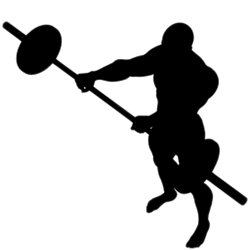
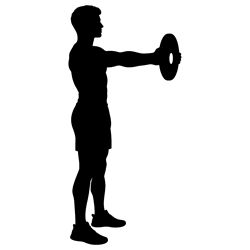
Front raises give the front delts direct work, which helps if your pressing doesn't already cover them or you want them to grow on their own. Dumbbells are the most common choice; the cable keeps tension low in the range where dumbbells feel light; a barbell or a single plate held in both hands keeps your arms together and makes the load easy to set. Whatever you use, a moderate weight with no body swing works better than a heavy one.
How to do it (Cable)
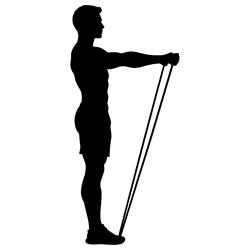
Attach a straight bar to the low pulley and stand facing away from the machine, far enough that the cable is under tension at your thighs.
Hold the bar overhand in front of your thighs, feet shoulder-width apart and knees soft.
Raise the bar straight in front of you to shoulder height with a slight bend in your elbows.
Lower it slowly against the pull. The cable angle keeps tension on the front delts through the whole range, unlike dumbbells.
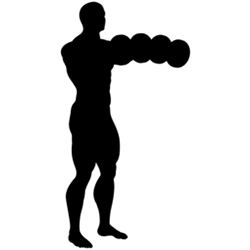
Stand with your feet hip-width apart, dumbbells in front of your thighs, palms facing your legs.
Raise the dumbbells straight in front of you to shoulder height, keeping a slight bend in your elbows.
Lower them slowly back to your thighs.
Keep your torso still. If you have to lean back to get the weight up, go lighter.
Stand with your feet shoulder-width apart, knees soft, and grip the barbell overhand at about shoulder width.
Hold the bar in front of your thighs with your arms straight.
Raise the bar in front of you to shoulder height with a slight bend in your elbows.
Lower it slowly. Keep your torso still; leaning back to get the bar up shifts the work to your lower back.
Stand tall holding a weight plate with both hands at the sides, arms hanging in front of your thighs.
Raise the plate in front of you with nearly straight arms until it reaches shoulder height.
Pause for a moment without leaning back.
Lower slowly back to your thighs. Holding one plate with both hands keeps the arms from drifting apart.
Common mistakes
Leaning back to lift the weight
Rocking your torso shifts the work to your lower back. Keep your torso still, and go lighter if you have to lean, as the steps suggest.
Raising above shoulder height
Going higher brings in the traps and adds little front delt work. Stop when your hands reach shoulder height.
Dropping the weight on the way down
Letting it fall back to your thighs skips half the rep. Lower slowly, especially on the cable, where the pull drags your arms back.
No cable tension at the bottom
Standing too close to the machine leaves the cable slack at your thighs. Step out until there's tension at the start, as the steps describe.
Sets, reps and progression
How many sets you do and how close to failure you take them depend on your goal and your week, not on the exercise. These guides cover it:
Alternatives that train the same thing
Same movement, a different angle or piece of equipment.