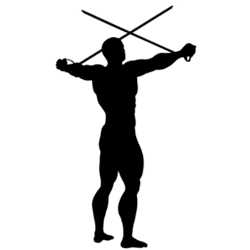
Face Pulls
A cable exercise where you pull a rope attachment toward your face, splitting your hands apart and keeping your elbows high, to train the rear delts and upper back.
- Primary muscles
- Rear delts
- Secondary
- Upper back
- Difficulty
- Beginner
- Logged as
- Weight × reps

Loads from YouTube only when you press play. The video is by an independent creator.
Why do it
Face pulls are a common way to balance out a lot of pressing and one of the easier ways to give the rear delts direct work. The cable keeps the tension even through the whole pull and lets you add weight in small steps, unlike a band, which is light at the start and heavy at the end. They work well light and for higher reps, with a short pause when the rope reaches your face.
How to do it
Attach a rope to a pulley set at upper-chest to eye height and stand facing the machine, feet staggered.
Hold the rope ends overhand and step back until your arms are extended and the cable has tension.
Pull the rope toward your face, splitting your hands apart and keeping your elbows high, at or above shoulder level.
Return slowly under control. Keep the weight light enough that your elbows stay up; dropping them turns this into a row.
Common mistakes
Elbows dropping into a row
Low elbows turn it into a row for the lats and mid-back. Keep them at or above shoulder height, and lighten the stack if they sink.
Leaning back to move the stack
Throwing your body back uses momentum. Use a staggered stance and keep your torso still while your arms do the work.
Pulley set too low
With the pulley at waist height, the line of pull drags your elbows down. Set it between upper-chest and eye height.
Not splitting the rope
Pulling both rope ends together to your chin shortens the movement. Split your hands apart so they finish beside your face.
Sets, reps and progression
How many sets you do and how close to failure you take them depend on your goal and your week, not on the exercise. These guides cover it:
Alternatives that train the same thing
Same movement, a different angle or piece of equipment.