Incline Reverse Fly
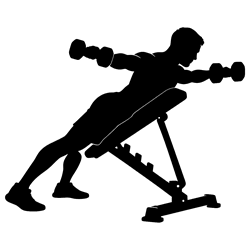
A chest-supported rear delt exercise: lying face down on an incline bench with a dumbbell in each hand, you raise your arms out to the sides until they're level with your shoulders.
- Primary muscles
- Rear delts
- Secondary
- Upper back
- Difficulty
- Beginner
- Logged as
- Weight × reps
Why do it
The bench holds your torso still, so you can't rock or use your lower back, which makes the rear delts easier to feel than in a bent-over reverse fly. That also makes it a good pick if your lower back gets tired from bent-over work. The weights will be light; a fixed slight elbow bend and a short pause at the top matter more than the load.
How to do it
Set a bench to about 30 to 45 degrees and lie face down on it with a dumbbell in each hand hanging below your shoulders.
Raise your arms out to the sides with a slight bend in the elbows until they are level with your shoulders.
Squeeze your shoulder blades together at the top for a moment.
Lower slowly back to the start. The bench takes your lower back out of it, so you cannot cheat with momentum.
Common mistakes
Turning it into a row
Bending your elbows more as you lift brings in the upper back and lats. Keep the slight bend fixed and move only at the shoulder.
Lifting your chest off the pad
Raising your chest to get the weights up brings momentum back in. Keep your chest on the bench for the whole set.
Shrugging toward your ears
If your traps take over, your shoulders creep up. Keep them down and think of moving your hands out wide, not up.
Bench set too upright
A steep bench turns the raise into something closer to a lateral raise. Keep it low enough that the dumbbells hang below your shoulders.
Sets, reps and progression
How many sets you do and how close to failure you take them depend on your goal and your week, not on the exercise. These guides cover it:
Alternatives that train the same thing
Same movement, a different angle or piece of equipment.