Reverse Butterfly
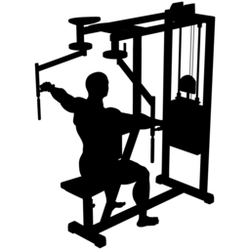
Sitting chest-in on the pec deck, you sweep the handles apart and back in a wide arc until your arms line up with your body, training the rear delts and upper back.
- Primary muscles
- Rear delts
- Secondary
- Upper back
- Difficulty
- Beginner
- Logged as
- Weight × reps
Loads from YouTube only when you press play. The video is by an independent creator.
Why do it
The chest pad holds your torso still, so there's no hinge to maintain and no way to swing, which makes it one of the easiest rear delt exercises to learn and to push close to failure. It suits beginners and anyone who struggles to feel bent-over flyes. Compared with cable or dumbbell versions you give up some freedom of path, but you get a steady, repeatable rep and simple weight changes. Set the seat carefully, because handle height decides whether the rear delts or the traps do the work.
How to do it
Set the seat so the handles line up with your shoulders and sit facing the machine with your chest against the pad.
Grip the handles with a slight bend in your elbows.
Pull them apart and back in a wide arc until your arms are in line with your body, squeezing your shoulder blades together.
Return slowly under control. Keep the weight light and lead with your elbows; pulling with straight arms turns this into a rear delt exercise rather than a shrug with extra steps.
Common mistakes
Leaving the seat at the wrong height
If the handles sit above your shoulders, the pull drifts toward a shrug. Adjust the seat so the handles line up with your shoulders before the first rep.
Bending your elbows to finish
Pulling the handles back by bending your arms turns it into a row. Keep the slight bend fixed and move from the shoulder in a wide arc.
Lifting your chest off the pad
Leaning back to grind out the last reps lets your lower back and momentum help. Keep your chest on the pad; when you can't, the set is over.
Loading the full stack
The rear delts are small, and a heavy stack gets moved by the traps and arms instead. Pick a weight you can move slowly with a brief hold at the back.
Sets, reps and progression
How many sets you do and how close to failure you take them depend on your goal and your week, not on the exercise. These guides cover it:
Alternatives that train the same thing
Same movement, a different angle or piece of equipment.