Hindu Push Up
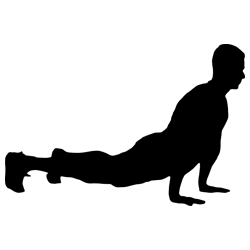
Starting in a downward dog, you swoop your chest down and forward between your hands into an upward dog, then push your hips back up in one flowing movement.
- Primary muscles
- Upper chest, Middle chest, Lower chest, Front delts
- Secondary
- Triceps, Serratus
- Difficulty
- Intermediate
- Logged as
- Reps
Loads from YouTube only when you press play. The video is by an independent creator.
Why do it
The Hindu push-up comes from traditional wrestling training and mixes pressing with mobility. It works your chest and front shoulders through a much bigger arc than a regular push-up, with your triceps and serratus helping, and takes your hips and spine through extension along the way. It suits bodyweight circuits and warm-ups where you want strength and movement in one exercise. Aim for a smooth, continuous sweep rather than grinding heavy reps.
How to do it
Start in a downward dog: hands shoulder-width apart, hips high, heels pressing toward the floor.
Bend your elbows and sweep your chest forward and down between your hands, staying close to the floor.
Straighten your arms as your hips drop, ending in an upward dog with your chest lifted and hips just above the ground.
Push your hips back up to the start. Move as one continuous sweep rather than stopping between positions.
Common mistakes
Breaking it into separate poses
Stopping in each position turns it into a stiff sequence. Keep it one continuous sweep from downward dog to upward dog and back.
Skipping the low swoop
Rocking straight from hips-high to chest-up misses the part where your arms bend. Bend your elbows and pass your chest close to the floor.
Dropping your hips to the floor
In the upward dog your hips should stay just above the ground. Letting them sink takes the load off your arms and dumps it into your lower back.
Shrugging in the upward dog
Finishing with your shoulders near your ears loses the open-chest position. Push the floor away and draw your shoulders down.
Sets, reps and progression
How many sets you do and how close to failure you take them depend on your goal and your week, not on the exercise. These guides cover it:
Alternatives that train the same thing
Same movement, a different angle or piece of equipment.