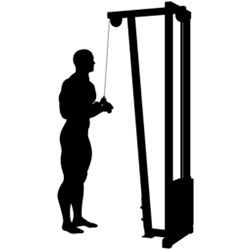
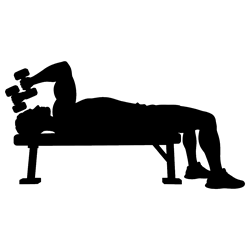
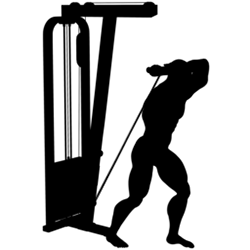
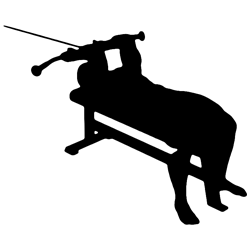
One-Arm Overhead Triceps Extension
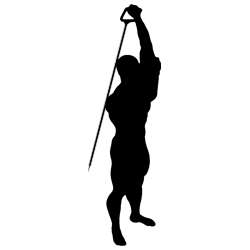
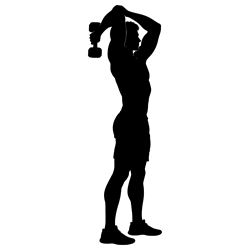
Holding a cable handle or dumbbell in one hand behind your head, elbow pointing up, you straighten your arm overhead and lower it back, working each triceps on its own.
Equipment
- Primary muscles
- Triceps
- Difficulty
- Beginner
- Logged as
- Weight × reps
- Primary muscles
- Triceps
- Difficulty
- Beginner
- Logged as
- Weight × reps
Why do it
Single-arm work lets each triceps get a full stretch behind your head without a bar or the other arm in the way, and it quickly shows if one side is weaker. Your free hand can brace the working elbow, which keeps the upper arm still. The cable holds tension through the whole range and adjusts in small steps; the dumbbell needs no machine and is hardest in the stretch near the bottom. Expect sets to take twice as long, since each arm works in turn.
How to do it (Cable)
Attach a single handle to the low pulley and stand facing away from the machine, feet shoulder-width apart.
Take the handle in one hand and raise your arm so your elbow points up and the handle sits behind your head.
Extend your elbow to press the handle up until your arm is straight, keeping your upper arm still.
Lower it slowly back behind your head. Steady your working elbow with your free hand if it drifts out to the side.
Stand or sit tall and hold a dumbbell overhead in one hand with your arm straight.
Keep your upper arm beside your ear and bend the elbow to lower the dumbbell behind your head.
Stop when you feel a stretch in the triceps.
Extend your elbow to press back up, then switch arms. Hold the working elbow with your free hand if it drifts outward.
Common mistakes
Letting the elbow drift out
Under load, the working elbow tends to flare sideways. Use your free hand to hold it in place, pointing up beside your head.
Leaning toward the working side
Tilting or twisting your torso lets your trunk help the arm. Stand or sit tall and keep your shoulders square.
Dropping the upper arm forward
If your upper arm tips forward as you press, the shoulder starts doing the work. Keep it beside your ear and move only the forearm.
Letting the strong arm set the pace
Start with your stronger side and the weaker one often falls short. Do the weaker arm first and match its reps on the other side.
Sets, reps and progression
How many sets you do and how close to failure you take them depend on your goal and your week, not on the exercise. These guides cover it:
Alternatives that train the same thing
Same movement, a different angle or piece of equipment.