One-Arm Push Up
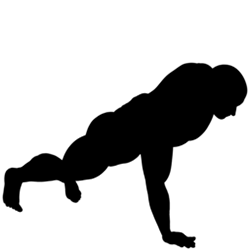
A push-up on a single hand with your feet wide and the other arm behind your back, where most of the challenge is keeping your hips from twisting.
- Primary muscles
- Upper chest, Middle chest, Lower chest
- Secondary
- Front delts, Triceps
- Logged as
- Reps
Loads from YouTube only when you press play. The video is by an independent creator.
Why do it
The one-arm push-up is a strength skill more than a regular chest exercise. It puts a big share of your body weight on one arm while your core fights rotation, so solid push-up strength comes first. Build up with your hand on a bench and lower the surface over time; archer push-ups also help bridge the gap. Wide feet make it easier to stay square, and bringing them closer is a later step. Treat it as practice, with low reps and full rest.
How to do it
Set up in a push-up position with your feet wide and one hand on the floor under the middle of your chest.
Put your other arm behind your back and brace your core and glutes so your hips don't twist.
Lower your chest toward the floor, keeping your working elbow fairly close to your body.
Press back up without letting your hips rotate. Build up with hands elevated on a bench first; the hard part is resisting the twist, not the pressing.
Common mistakes
Hips twisting open
Letting your hips rotate toward the free arm shortens the push and takes load off the working side. Brace your glutes and core so your hips stay square.
Feet too close together
A narrow stance makes resisting the twist much harder than it needs to be early on. Start with wide feet and narrow them as you get stronger.
Working hand set too wide
Placing the hand out to the side makes the twist worse and the press weaker. Put it under the middle of your chest.
Grinding reps on the floor too soon
Ugly floor reps teach you to twist. Practice clean reps with your hand on a bench and lower it step by step.
Sets, reps and progression
How many sets you do and how close to failure you take them depend on your goal and your week, not on the exercise. These guides cover it:
Alternatives that train the same thing
Same movement, a different angle or piece of equipment.