One-Arm Triceps Pushdown
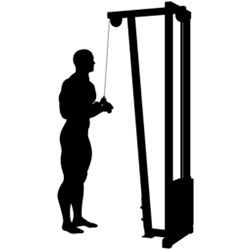
Facing a high pulley, you push a single handle down with one arm, elbow pinned to your side, until your arm is straight, then let it rise slowly, working one triceps at a time.
- Primary muscles
- Triceps
- Difficulty
- Beginner
- Logged as
- Weight × reps
Loads from YouTube only when you press play. The video is by an independent creator.
Why do it
Working one arm at a time makes it obvious if one triceps is weaker and stops the stronger side from quietly doing more. A single handle also lets your hand and elbow settle into whatever path feels smoothest, which a fixed bar doesn't. Because the load per side is lighter, strict form is easier to keep than on a heavy two-arm bar. It works as a finisher after pressing or as your main triceps exercise when you want to focus on each arm.
How to do it
Attach a single handle to the high pulley and stand facing the machine, feet shoulder-width apart.
Take the handle in one hand with an overhand grip, elbow bent and pinned to your side.
Push down until your arm is fully extended, moving only at the elbow.
Let your forearm come back up slowly. Finish all reps on one arm before switching. Working one arm at a time makes it obvious if one side is weaker.
Common mistakes
Letting the elbow slide forward
As the arm tires, the elbow tends to creep forward and the shoulder helps. Keep it pinned to your side and move only from the elbow down.
Leaning into the stack
Shifting your bodyweight over the handle pushes it down for you. Stand tall, brace your free hand on the machine if needed, and let the triceps do it.
Rolling your shoulder at the bottom
Dipping your shoulder forward at the end adds range but not triceps work. Keep your shoulders level and stop when your arm is straight.
Stopping short of lockout
Leaving the elbow slightly bent skips the part where the triceps contract hardest. Push until your arm is fully extended, then return slowly.
Sets, reps and progression
How many sets you do and how close to failure you take them depend on your goal and your week, not on the exercise. These guides cover it:
Alternatives that train the same thing
Same movement, a different angle or piece of equipment.