Paused Bench Press
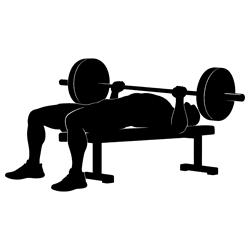
A barbell bench press where you hold the bar motionless on your chest for a moment before pressing, taking away the bounce and stretch reflex.
- Primary muscles
- Upper chest, Middle chest, Lower chest
- Secondary
- Front delts, Triceps
- Difficulty
- Intermediate
- Logged as
- Weight × reps
Loads from YouTube only when you press play. The video is by an independent creator.
Why do it
Pausing on your chest removes the rebound that normally helps you off the bottom, so you press from a dead stop. That builds strength where many bench presses stall and teaches you to stay tight in the hardest position. Powerlifters train it because competition benching requires a pause, but it's useful for anyone who wants more control. Expect to use a bit less weight than on your normal bench, and keep the pause the same length on every rep.
How to do it
Lie on a flat bench with your eyes under the bar, feet flat, and grip the bar a bit wider than shoulder-width.
Unrack and lower the bar to your chest under control.
Hold the bar motionless on your chest for a full one to two seconds without letting it sink in or bouncing.
Press back up to lockout. The pause removes the stretch reflex, so expect to use about 10 percent less than your normal bench.
Common mistakes
Letting the bar sink into your chest
Relaxing during the pause lets the bar settle deeper and costs you your tightness. Keep pressure into the bar and your upper back locked.
A pause that's barely a pause
A quick touch dressed up as a pause misses the point. Wait until the bar is completely still, then hold a short beat before pressing.
Going loose during the stop
Many lifters relax their legs and back while the bar sits on their chest. Keep your feet driving and your shoulder blades pinned so you can press out of the stop.
Changing the pause length
If some reps get a long pause and others barely stop, you can't compare sessions. Keep every pause the same length.
Sets, reps and progression
How many sets you do and how close to failure you take them depend on your goal and your week, not on the exercise. These guides cover it:
Alternatives that train the same thing
Same movement, a different angle or piece of equipment.