Pseudo Planche Push Up
A push-up with your fingers turned back and your shoulders leaned out past your hands, so your chest, front delts and triceps press against a long, planche-like lever.
- Primary muscles
- Lower chest, Middle chest
- Secondary
- Upper chest, Front delts, Triceps
- Logged as
- Reps
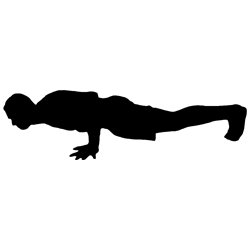
Loads from YouTube only when you press play. The video is by an independent creator.
Why do it
This is the usual bridge between regular push-ups and planche work. Leaning forward moves your hands back toward your hips, which makes your chest and shoulders work much harder without adding any weight. It suits people who can already do clean push-ups for solid sets and want a harder bodyweight press. You set the difficulty with the lean, so shift a little further forward over the weeks instead of jumping straight to a deep lean.
How to do it
Start in a push-up position with your hands slightly wider than shoulder-width and your fingers turned back toward your feet.
Lean forward so your shoulders travel out in front of your hands. The further forward you lean, the harder it gets.
Lower your chest toward the floor with your elbows close to your body, holding the lean and a straight body line.
Press back up to the start. Warm up your wrists first, since the turned-out hand position loads them hard.
Common mistakes
Losing the lean as you lower
Your shoulders tend to drift back over your hands at the bottom, which turns it into a normal push-up. Keep them ahead of your hands for the whole rep, even if that means a smaller lean.
Letting your hips pike up
Piking shortens the lever and takes load off your chest and shoulders. Squeeze your glutes and keep a straight line from head to heels.
Flaring your elbows out wide
Wide elbows make the lean hard to control. Keep them close to your sides so they travel back toward your hips as you lower.
Skipping the wrist warm-up
The turned-back hands bend your wrists far back under a lot of load. Do some wrist circles and gentle rocking on all fours before your first set.
Sets, reps and progression
How many sets you do and how close to failure you take them depend on your goal and your week, not on the exercise. These guides cover it:
Alternatives that train the same thing
Same movement, a different angle or piece of equipment.