Seated Good Morning
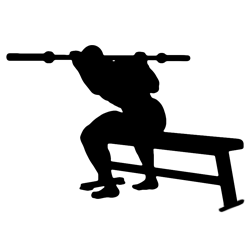
A barbell hinge done sitting on a bench: with the bar across your upper back, you lean forward from your hips as far as you can with a flat back, then sit back up.
- Primary muscles
- Hamstrings, Glutes, Lower back
- Difficulty
- Advanced
- Logged as
- Weight × reps
Loads from YouTube only when you press play. The video is by an independent creator.
Why do it
Sitting takes your legs mostly out of the movement, so the seated good morning works your lower back, glutes and upper hamstrings more directly than the standing version, over a much shorter range. It suits experienced lifters who want direct lower back work without heavy pulling from the floor. Keep the load modest: the bar stays on your back the whole time, and the rep ends where your back stops being flat.
How to do it
Sit on a bench with your feet flat and shoulder-width apart, and rest a barbell across your upper back; not your neck.
Set your back flat and your chest up.
Hinge forward from the hips as far as you can go without your back rounding.
Extend your hips to come back upright. Sitting locks out the hips, so this trains the lower back and upper hamstrings more directly than a standing good morning.
Common mistakes
Rounding your back to go lower
The rep ends where your back stops being flat, which may be only partway down. Curling forward toward your thighs moves the work from your hips to your spine.
Resting the bar on your neck
A bar on your neck is uncomfortable and tends to roll. Set it across your upper back, on the muscle, and pull it tight against you.
Bouncing out of the bottom
Dropping into the bottom and rebounding uses momentum in the position you most want to control. Lower slowly, pause briefly and come up by extending your hips.
Going heavy too early
The short range makes the weight feel light, but your lower back is a main mover here. Start with an empty bar and add load in small steps.
Sets, reps and progression
How many sets you do and how close to failure you take them depend on your goal and your week, not on the exercise. These guides cover it:
Alternatives that train the same thing
Same movement, a different angle or piece of equipment.