Spiderman Push Up
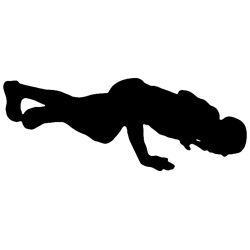
A push-up where you bring one knee out to the side toward your elbow as you lower, adding hip mobility and oblique work to a regular chest press.
- Primary muscles
- Upper chest, Middle chest, Lower chest
- Secondary
- Front delts, Triceps, Obliques, Abs
- Difficulty
- Intermediate
- Logged as
- Reps
Loads from YouTube only when you press play. The video is by an independent creator.
Why do it
The knee drive takes one foot off the floor, so you lower and press on three points of contact while your obliques and abs keep your hips square. It suits people who already have solid push-ups and want more core and hip work in the same rep, which makes it handy in warm-ups and bodyweight circuits. Your attention is split between the press and the leg, so it's not the version to load up for chest growth; treat it as a coordination and trunk variant.
How to do it
Start in a push-up position with your hands slightly wider than shoulder-width and your body in a straight line.
As you lower your chest toward the floor, bring one knee up toward the elbow on the same side, keeping it off the ground.
Press back up and return that leg to the start.
Alternate sides each rep. Keep your hips level; letting them rotate turns it into a twist rather than a push-up.
Common mistakes
Rotating your hips toward the knee
Letting your hips twist as the leg comes up turns the rep into a twist. Keep your belt line parallel to the floor and only bring the knee as far as you can without turning.
Dragging the foot along the floor
If your foot scrapes the floor, the knee isn't really driving. Lift it clear and move it out to the side, as if you were climbing a wall.
Rushing the reps
Pairing the leg with the press takes coordination, and speed hides a sagging middle. Lower slowly so the knee reaches your elbow as your chest nears the floor.
Shortening the push to fit the knee
Some people stop halfway down so the leg has time to move. Keep the full push-up range and fit the knee drive inside it.
Sets, reps and progression
How many sets you do and how close to failure you take them depend on your goal and your week, not on the exercise. These guides cover it:
Alternatives that train the same thing
Same movement, a different angle or piece of equipment.