Step-Ups
A single-leg exercise where you place one foot on a knee-high box, drive through it to stand on top and step back down, training the quads and glutes of the working leg.
Equipment
- Primary muscles
- Quads, Glutes
- Secondary
- Adductors
- Difficulty
- Intermediate
- Logged as
- Weight × reps
- Primary muscles
- Quads, Glutes
- Secondary
- Adductors
- Difficulty
- Beginner
- Logged as
- Weight × reps
- Primary muscles
- Quads, Glutes
- Secondary
- Adductors
- Difficulty
- Beginner
- Logged as
- Reps
Why do it
Step-ups are easy to learn and look a lot like climbing stairs or a steep trail, which makes them a good choice for beginners and for anyone who wants more single-leg strength. Bodyweight is enough to start; dumbbells add load and are easy to drop if you lose your balance. The barbell version allows the most weight, but balancing on the box gets harder, so save it for when you're already steady.
How to do it (Barbell)
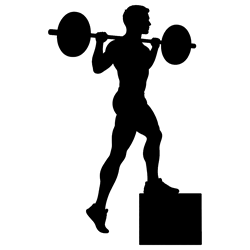
Set a barbell across your upper back and stand in front of a knee-high box or bench.
Place one whole foot on the box and drive through it to step up until that leg is straight.
Bring the other foot up to stand on the box, then step back down with that foot first so the working leg controls the descent.
Finish all reps on one side before switching. Avoid pushing off the bottom foot; the top leg does the work.
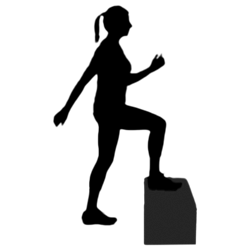
Hold a dumbbell in each hand at your sides and stand facing a stable box or bench at about knee height.
Place one whole foot on the box and press through it to stand up on top.
Step back down with the same foot, then the other.
Alternate legs each rep. Drive with the top leg rather than pushing off the floor with the trailing foot.
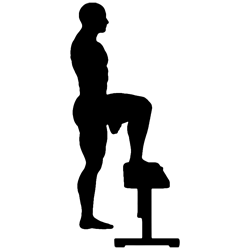
Stand facing a stable box or bench at about knee height, feet hip-width apart.
Place one whole foot on the box and press through it to stand up on top.
Step back down with the same foot, then the other.
Alternate legs each rep. Drive with the top leg instead of pushing off the floor with the trailing foot.
Common mistakes
Pushing off the bottom foot
Springing off the floor leg lets it do half the work. Keep the trailing foot light and let the top leg lift you.
Box too high
If your hip starts far below your knee, you'll lean and bounce to get up. Use a box around knee height so you can stand up smoothly.
Only half your foot on the box
With your heel hanging off, you push through your toes and lose the glute drive. Set your whole foot on the box before you push.
Dropping off the box
Falling back to the floor skips the lowering half of the rep. Step down under control instead of letting gravity take you.
Sets, reps and progression
How many sets you do and how close to failure you take them depend on your goal and your week, not on the exercise. These guides cover it:
Alternatives that train the same thing
Same movement, a different angle or piece of equipment.