Straddle Planche Push Up
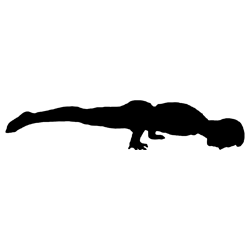
An advanced calisthenics press: holding a straddle planche with your legs wide and your body level above the floor, you bend your arms to lower your chest and press back up.
- Primary muscles
- Middle chest, Lower chest, Front delts
- Secondary
- Upper chest, Triceps
- Logged as
- Reps
Why do it
This is one of the hardest pushing moves in calisthenics: your shoulders and chest hold your whole body on a long lever with nothing touching the floor but your hands. It's for people who can already hold a straddle planche, usually after a long stretch of tuck and advanced tuck work. Compared with the tuck version, straight spread legs lengthen the lever a lot; compared with the full planche push-up, the straddle shortens it, so it sits between the two.
How to do it
Build up to this with tuck and advanced tuck planche holds first. Warm up your wrists and shoulders.
Set your hands about shoulder-width apart, lean your shoulders forward past your hands and lift into a straddle planche with your legs wide and straight, body parallel to the floor.
Bend your elbows to lower your chest toward the floor while holding the body line.
Press back up to straight arms. The wider your legs, the shorter the lever and the easier the hold, so start wide and narrow the straddle as you get stronger.
Common mistakes
Bending at the hips
Piking your hips up or letting your legs drop shortens the lever and makes the rep easier than it looks. Squeeze your glutes and keep your hips in line with your shoulders and feet.
Losing the lean at the bottom
If your shoulders drift back as you lower, your feet come down. Keep leaning forward as your elbows bend so your shoulders stay well in front of your hands.
Narrowing the straddle too soon
Bringing your legs closer together lengthens the lever and makes every rep much harder. Keep the straddle wide enough to hold the line, and narrow it only when reps stay clean.
Pressing before you can hold it
If you can't hold a straddle planche still for a few seconds, the push-up turns into a fall. Build the static hold first, then add partial reps.
Sets, reps and progression
How many sets you do and how close to failure you take them depend on your goal and your week, not on the exercise. These guides cover it:
Alternatives that train the same thing
Same movement, a different angle or piece of equipment.