Sumo Deadlift
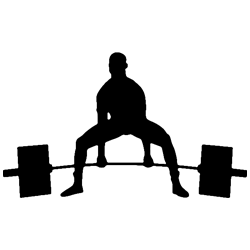
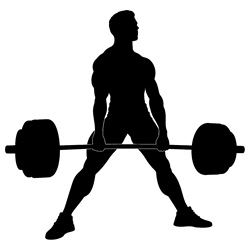
A wide-stance barbell deadlift: with your toes turned out and hands inside your legs, you push the floor apart and stand up, working your glutes, hamstrings and lower back.
- Primary muscles
- Hamstrings, Glutes, Lower back
- Secondary
- Quads, Adductors, Traps, Forearm flexors
- Difficulty
- Intermediate
- Logged as
- Weight × reps
Loads from YouTube only when you press play. The video is by an independent creator.
Why do it
The wide stance keeps your torso more upright and shortens how far the bar travels compared with a conventional deadlift, so your hips and adductors take on more of the work. It suits lifters with good hip mobility and anyone whose lower back tires before their legs in a regular pull. The start off the floor tends to be slow, so be patient: keep pushing and stay tight until the bar breaks free.
How to do it
Stand with a wide stance, toes turned out about 45 degrees, the bar over your midfoot.
Push your knees out and grip the bar inside your legs with straight arms, chest up and back flat.
Drive your feet into the floor and stand up, keeping the bar close to your shins and thighs.
Lock out by squeezing your glutes, then lower the bar under control along the same path. The wide stance keeps your torso more upright than a conventional deadlift, so your hips and adductors do more of the work.
Common mistakes
Knees caving in
If your knees fall inward, your hips can't open and the bar drifts away from you. Push your knees out over your toes from setup through lockout.
Hips shooting up first
Raising your hips before the bar moves turns it into a stiff-legged pull with a wide stance. Wedge your hips toward the bar, then push the floor apart so hips and chest rise together.
Stance too wide for your hips
A very wide stance looks strong but can leave your knees inside your feet and your shins slanted. Start moderately wide and widen only as far as your knees stay over your feet.
Gripping too wide
Hands set too far apart lengthen the pull and clash with your legs. Grip just inside your knees with your arms hanging straight down.
Sets, reps and progression
How many sets you do and how close to failure you take them depend on your goal and your week, not on the exercise. These guides cover it:
Alternatives that train the same thing
Same movement, a different angle or piece of equipment.