Svend Press
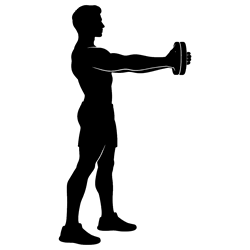
A standing chest isolation move: you squeeze two small plates together between your palms and press them straight out from your chest, keeping the squeeze the whole time.
- Primary muscles
- Upper chest, Middle chest, Lower chest
- Secondary
- Front delts, Triceps
- Difficulty
- Beginner
- Logged as
- Weight × reps
Loads from YouTube only when you press play. The video is by an independent creator.
Why do it
The Svend press works your chest through an inward squeeze rather than a heavy load, so it suits finishers, home workouts with a couple of plates, and anyone learning to feel their chest contract. It needs no bench and almost no setup. Because most of the resistance comes from how hard you squeeze, progress is harder to measure than on a fly or press, so use it as a finisher or warm-up rather than your main chest exercise.
How to do it
Stand tall and press two small weight plates together between your palms at chest height, fingers pointing forward.
Squeeze the plates as hard as you can and push them straight out in front of your chest until your arms are nearly straight.
Hold for a second with the chest fully contracted.
Pull the plates back to your chest without easing the squeeze. The weight barely matters; the inward squeeze is what works the chest.
Common mistakes
Easing the squeeze on the way back
Most of the work comes from pressing the plates together, so letting the pressure drop as you pull them in turns half of each rep into rest. Keep squeezing hard in both directions.
Using plates that are too heavy
Heavy plates turn it into a front raise for your shoulders. Pick small plates you can hold easily and make it harder by squeezing more, not by loading up.
Pressing upward instead of straight out
Letting the plates drift up toward your face shifts the work to your front delts. Press straight out at chest height and keep your shoulders down.
Leaning back as you press
Arching to push the plates out moves the effort into your lower back. Stand tall with your ribs down and let only your arms move.
Sets, reps and progression
How many sets you do and how close to failure you take them depend on your goal and your week, not on the exercise. These guides cover it:
Alternatives that train the same thing
Same movement, a different angle or piece of equipment.