Treadmill Walk
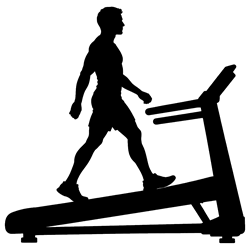
Walking on a treadmill, usually on an incline, at a pace that feels hard but still lets you talk in short sentences.
- Primary muscles
- Glutes, Calves, Hamstrings
- Secondary
- Quads
- Logged as
- Session: time, plus what the machine shows, such as distance and calories
Loads from YouTube only when you press play. The video is by an independent creator.
Why do it
Incline walking is one of the easiest ways to get real cardio without running: a steeper belt makes every step lift you uphill, so your heart rate climbs while the impact stays low. Raise the incline before the speed and keep the pace where you can still talk in short sentences. Holding the rails is the most common mistake, since it takes a big share of the effort off your legs. Walking steeper for the same time is progress.
How to do it
Clip the safety key to your clothing, start the belt at an easy walk and step on from the side rails.
Raise the incline first, then the speed, until walking feels hard but you can still talk in short sentences.
Walk upright with your hands off the rails and push off through your whole foot; leaning on the console makes the climb easier than it looks.
Lower the incline for the last minutes before you stop. Log incline and speed as they change; steeper for the same time counts as progress. Copy distance and calories from the display at the end.
Common mistakes
Holding the rails
Hanging on to the rails or console makes the climb much easier than the display suggests. Walk with your arms swinging.
Speed before incline
Fast walking on a flat belt turns into an awkward jog. Raise the incline first, then the speed.
Leaning forward or back
Walk upright and push off through your whole foot.
Sets, reps and progression
How many sets you do and how close to failure you take them depend on your goal and your week, not on the exercise. These guides cover it:
Alternatives that train the same thing
Same movement, a different angle or piece of equipment.