Band Face Pull
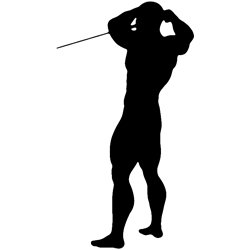
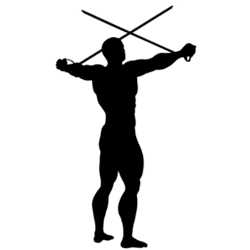
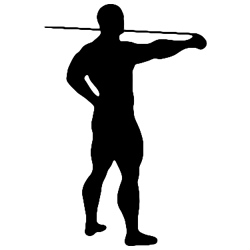
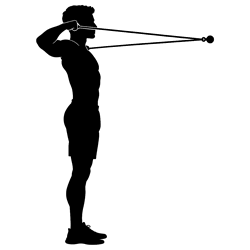
A face pull done with a resistance band anchored at face height: you pull the band toward your face, hands ending beside your ears, to train the rear delts and upper back.
- Primary muscles
- Rear delts
- Secondary
- Upper back, Traps
- Difficulty
- Beginner
- Logged as
- Band × reps
Loads from YouTube only when you press play. The video is by an independent creator.
Why do it
It's an easy way to train the rear delts and upper back at home, in a warm-up or between sets, since all you need is a band and something to anchor it to. Unlike the cable version, the band gets harder as it stretches, so the start of the pull is light and the end is the toughest part. That suits the squeeze at the finish, but it means you need to step far enough back to have tension right from the start.
How to do it
Anchor a band at about face height and hold one end in each hand with your palms facing each other. Step back until the band is taut.
Pull the band toward your face, leading with your elbows and letting your hands separate so they end beside your ears.
Squeeze your shoulder blades together and rotate your forearms up at the end of the pull.
Return slowly to the start with your arms straight. Log the band you used; a stronger band counts as progress.
Common mistakes
Standing too close to the anchor
If the band is slack at the start, the first half of the rep does nothing. Step back until it's taut with your arms straight.
Elbows dropping to your sides
Pulling with low elbows turns it into a row. Lead with your elbows high and let your hands finish beside your ears.
Snapping back to the start
The band pulls your arms forward fast if you let it. Return slowly and keep tension all the way out.
Skipping the rotation at the end
Stopping at your face without turning your forearms up leaves part of the move out. Finish by rotating your hands up, as the steps describe.
Sets, reps and progression
How many sets you do and how close to failure you take them depend on your goal and your week, not on the exercise. These guides cover it:
Alternatives that train the same thing
Same movement, a different angle or piece of equipment.