Band Pull-Through
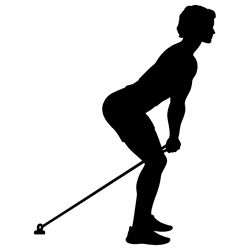
Facing away from a low anchor, you hinge your hips back as the band pulls your hands between your legs, then drive your hips forward to stand, working glutes and hamstrings.
- Primary muscles
- Glutes, Hamstrings
- Secondary
- Lower back
- Difficulty
- Beginner
- Logged as
- Band × reps
Loads from YouTube only when you press play. The video is by an independent creator.
Why do it
The pull-through is one of the easiest ways to learn the hip hinge, because the band pulls you back into it and your glutes have to finish it. It suits beginners, home training and warm-ups before deadlifts or swings. The band gets harder as you stand up, so the load is heaviest at the top where your glutes squeeze and lighter in the stretch. Compared with the cable version it's portable but harder to load precisely; progress by using a stronger band or standing farther from the anchor.
How to do it
Anchor a band low behind you and stand facing away from it, holding the band between your legs with both hands.
Push your hips back and let the band pull your hands behind you, keeping your back flat and your knees slightly bent.
Drive your hips forward to stand tall, squeezing your glutes at the top.
Keep your arms straight throughout; the hips do the work. Log the band you used; a stronger band counts as progress.
Common mistakes
Squatting instead of hinging
Bending your knees a lot and dropping straight down moves the work to your thighs. Keep a slight knee bend and send your hips back, as if shutting a door behind you with them.
Pulling with your arms
Bending your elbows to drag the band forward takes work away from your hips. Keep your arms straight; they're just hooks holding the band.
Letting the band snap you back
The band pulls hardest at the top, so it wants to yank you back into the hinge. Control the way back and take as long to hinge as you did to stand.
Standing too close to the anchor
With little stretch on the band, there's almost no resistance for most of the rep. Step away until the band is taut even at the bottom of the hinge.
Sets, reps and progression
How many sets you do and how close to failure you take them depend on your goal and your week, not on the exercise. These guides cover it:
Alternatives that train the same thing
Same movement, a different angle or piece of equipment.