Clean and Press
A one-arm kettlebell move: you snap your hips to pull the bell from the floor into the rack position at your shoulder, then press it overhead until your arm is straight.
- Primary muscles
- Front delts, Lower back, Glutes, Hamstrings
- Secondary
- Upper back, Triceps, Quads
- Logged as
- Weight × reps
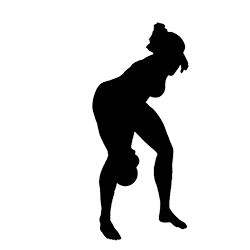
Loads from YouTube only when you press play. The video is by an independent creator.
Why do it
It links a hip-driven pull with a strict press, so one movement trains your glutes, hamstrings and lower back plus the shoulder, which makes it efficient for full-body sessions and kettlebell workouts. It's more technical than it looks: the clean has to land softly in the rack before you can press well, so practice it with a light bell first. Working one side at a time also shows you if one shoulder is weaker.
How to do it
Hinge at the hips with a flat back and grip a kettlebell on the floor with one hand.
Snap your hips forward to pull it up your body and rotate your hand around it into the rack position, elbow tucked.
Brace your core, then press the kettlebell overhead until your arm is straight and close to your head.
Lower it back to the rack, then down between your legs for the next rep. Finish all reps on one side before switching.
Common mistakes
Bell crashing onto the forearm
If the kettlebell flips over and smacks your wrist, you're swinging it around instead of guiding it. Keep it close and rotate your hand around it as it rises.
Curling the bell up
Pulling with your arm instead of your hips makes the clean slow and tiring. Snap your hips forward and let the arm just guide.
Pressing out of a loose rack
Pressing before the bell is settled at your shoulder, elbow tucked, makes it drift out. Pause in the rack, brace, then press.
Leaning away to finish the press
Bending sideways to get the bell up shifts the work off your shoulder. Brace your core and press until your arm is straight and close to your head.
Sets, reps and progression
How many sets you do and how close to failure you take them depend on your goal and your week, not on the exercise. These guides cover it:
Alternatives that train the same thing
Same movement, a different angle or piece of equipment.